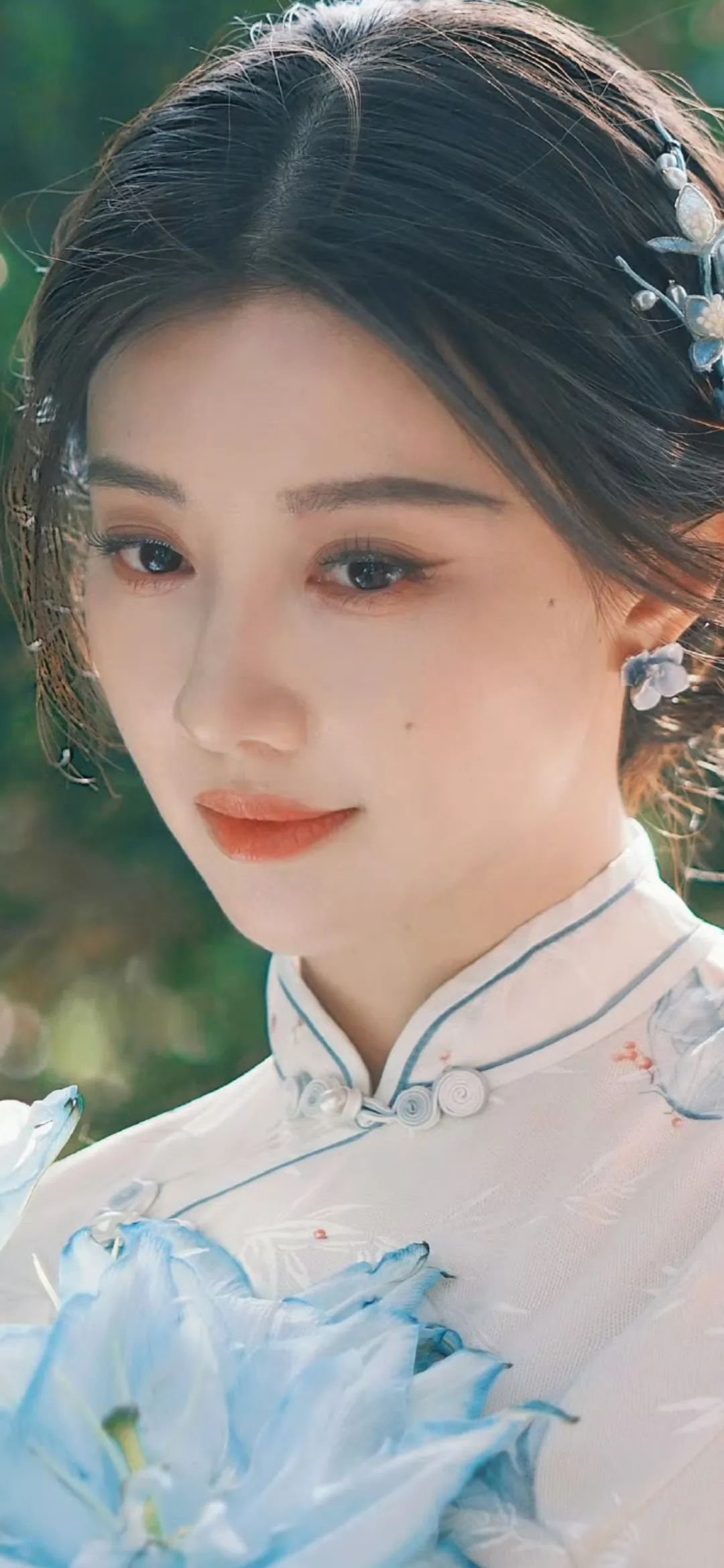
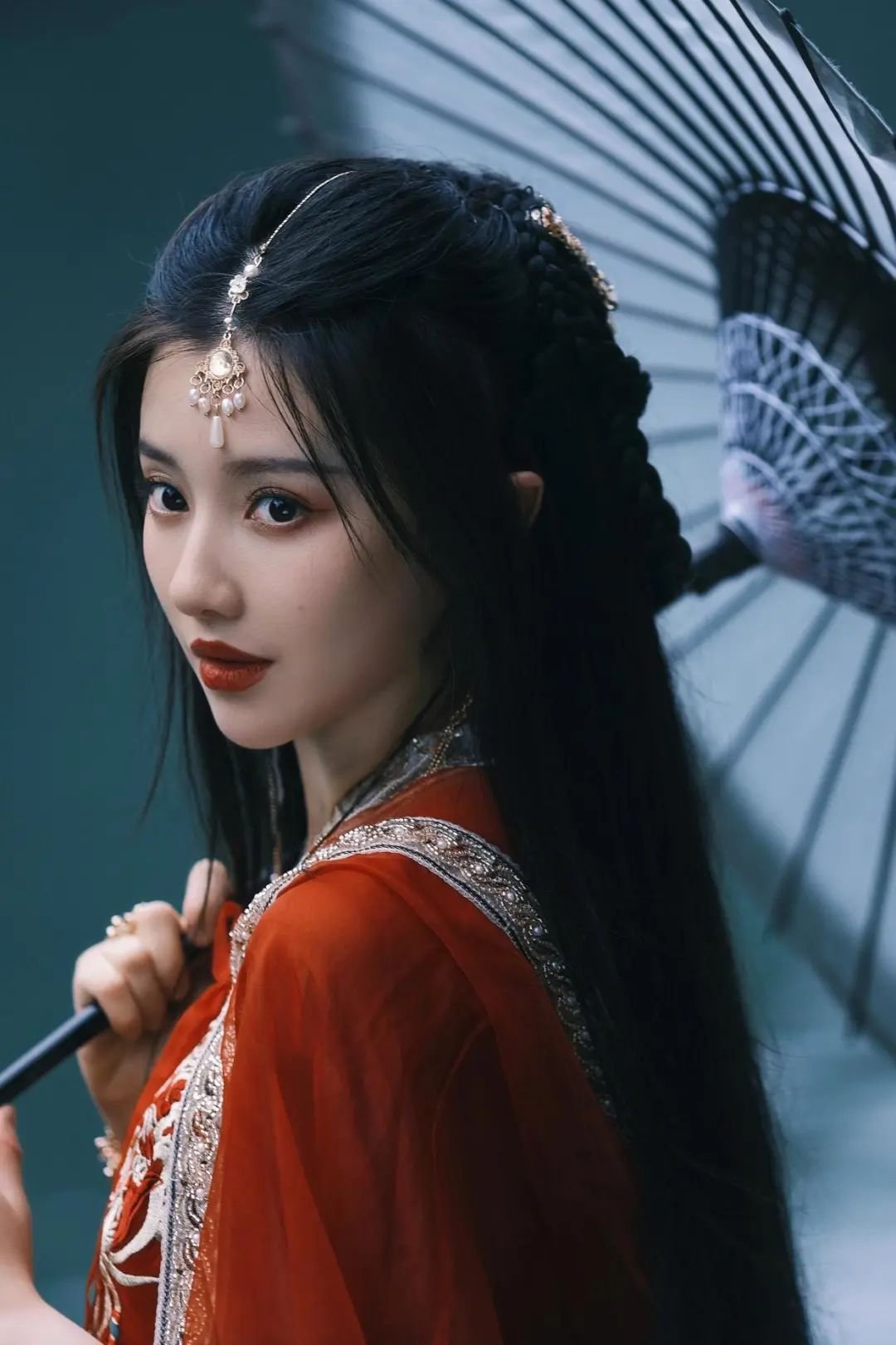
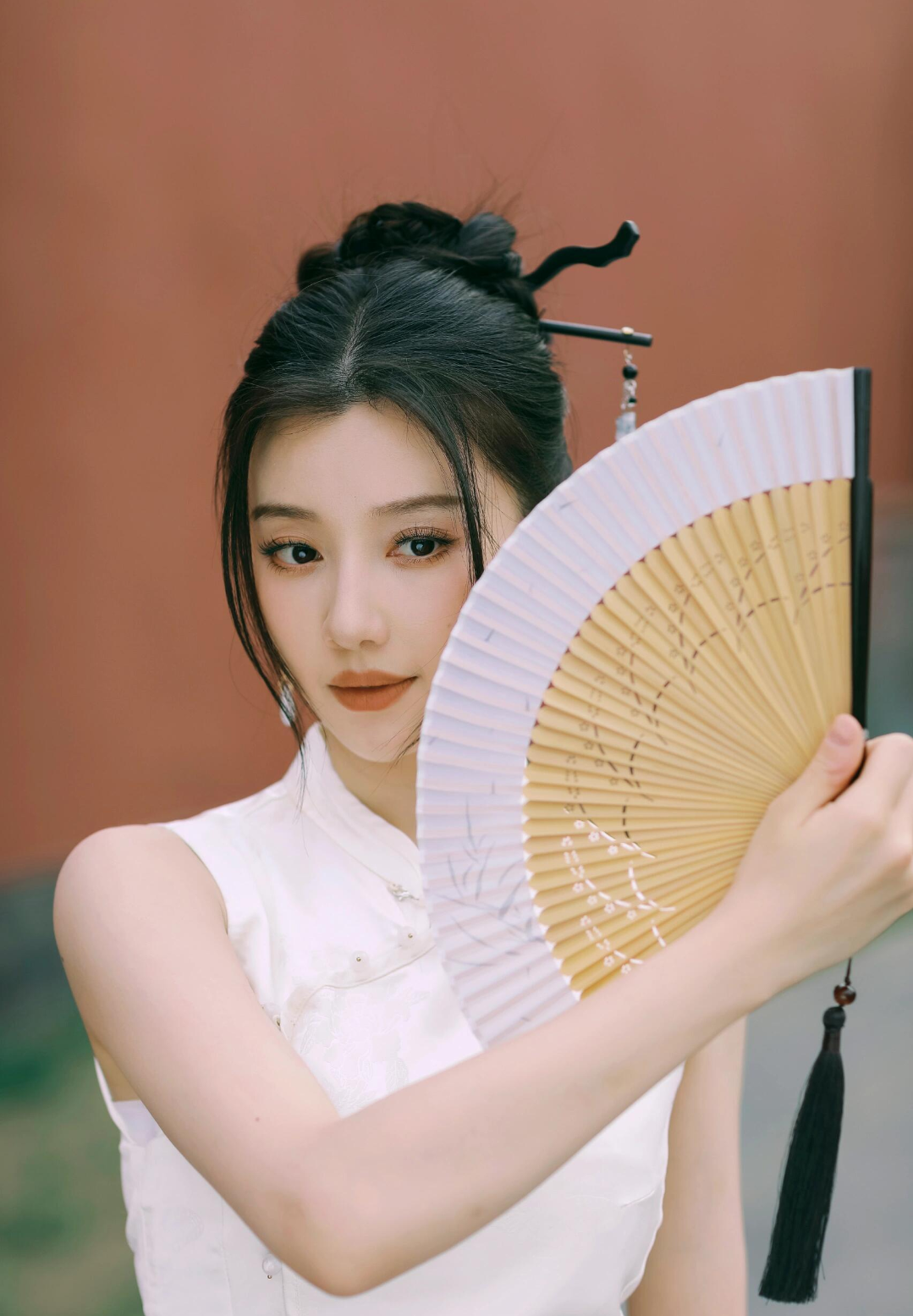
In many discussions among viewers, Wang Herun always seems to be a supporting actress with a "strong presence". Some people criticize her for having "too many roles", while others question her frequent appearances in Huanrui dramas. But if we put aside the inherent impression of "Huanrui's big gift package", to be fair, Wang Herun's performance in many works is actually quite remarkable.
#post_seo_title #separator_sa #site_title
1. She has a strong ability to digest roles and is a steady and steady female supporting actress Wang Herun plays important roles in many dramas produced by Huanrui. From ancient costumes to modern youth, she can deliver stable performances in almost every work. Her advantage is not "outshining" or "stealing the show", but being able to accurately understand the role positioning, make good supplements and comparisons outside the main line, and make the plot more layered. Although the audience has some complaints about the saying that "Huanrui is supporting the role", Wang Herun's control over the role has always been clear and in place.
#post_seo_title #separator_sa #site_title
Rather than saying that everyone "hates Wang Herun", it's more like they are tired of the script design with unbalanced supporting roles and unreasonable character settings. However, her performance in the film is relatively solid and professional.
#post_seo_title #separator_sa #site_title
2. Step out of your comfort zone and challenge new themes of detective stories in the Republic of China In addition to continuing cooperation with H&R Century PicturesWang Herun also has a new project about to launch soon.It is reported that she will star in the Republican-era detective drama "The Strange Detective of Beijing," which is expected to begin filming in mid-month. This is a new attempt with a different style from her previous work, and it is also an opportunity for her to expand her acting range.
#post_seo_title #separator_sa #site_title
Detective dramas require actors to have stronger logical expression and rhythm control, and also test the integration of the role with the overall plot. It is worth looking forward to whether Wang Herun can take this opportunity to refresh the audience's impression and gain more recognition.
This year's Cannes Film Festival was once again a star-studded affair, and among the many Asian faces, the simultaneous appearance of Li Bingbing and Jun Ji-hyun quickly sparked considerable discussion. This wasn't the first time the two had appeared together at an international film festival. They had previously collaborated on the film *Snow Flower and the Secret Fan*. Back then, one was a Chinese actress just beginning her international career, while the other was a South Korean star who had rapidly risen to fame across Asia thanks to the Korean Wave. Their reunion at Cannes more than a decade later focused not only on their red carpet looks but also on the different marks that time had left on them. Li Bingbing's "stability" stemmed from her long-term commitment to maintaining a polished appearance. At 53, Li Bingbing maintained a remarkably stable overall condition even under the high-definition lenses of foreign media. While signs of aging were visible in the unedited photos—fine lines and sagging skin were not entirely absent—her overall skin condition, mental state, and demeanor remained remarkably polished. Especially without excessive filters, her aura remained remarkably complete. In fact, this is one of the most consistent impressions Li Bingbing has given the outside world over the years. She may no longer be the most active commercial actress, but she has always maintained a very mature ability to manage her public image. From her early years of relentlessly filming to her later shift towards less frequent but more quality-focused exposure, she has always possessed a very obvious sense of "self-control." This sense of control is not only reflected in her appearance, but also in her demeanor in the face of public opinion and industry changes. Many people who mention Li Bingbing will find that she has rarely been involved in large-scale controversies in recent years, nor has she experienced a significant drop in reputation. Even with the ever-changing market environment, she has been able to maintain a relatively stable position in the industry. And this stability, to some extent, is directly reflected in one's mental state. Therefore, rather than simply discussing "frozen age" or "maintenance," what the outside world truly perceives is a relaxation and stability that comes from long-term accumulation. Jun Ji-hyun's fatigue is not just a matter of age. In contrast, the state of 44-year-old Jun Ji-hyun this time has sparked another discussion. This is her first appearance on the Cannes red carpet in 11 years. As one of the most representative actresses in South Korea, she has long possessed extremely strong market appeal. The charisma she exuded during "My Sassy Girl" and the peak of the Korean Wave brought by "My Love from the Star" made her one of the most recognizable Korean stars in Asia. Therefore, the public had high expectations for her when she reappeared on the international red carpet. However, judging from her current appearance, many netizens noticed a noticeable fatigue. Both her facial expressions and the emotions in her eyes lacked the sharp, vibrant star aura of the past. However, this change is not necessarily just a simple matter of "aging." In recent years, Jun Ji-hyun's career has experienced significant fluctuations. Increased competition in the Korean film and television industry, changes in her postpartum comeback schedule, and ongoing discussions about her family and business have all contributed to a less stable public image compared to her peak. Especially in the Chinese internet sphere, the controversies surrounding her past persist, so every time she reappears in the public eye, the comments section is often filled with emotional reactions. This constant state of controversy and exhaustion can easily affect a person's public image. Often, what viewers perceive as a "poor condition" is not just a skin problem, but a change in an individual's overall mental energy. Looking back at "Snow Flower and the Secret Fan" more than a decade later, the sentiment of the era is completely different. Interestingly, when netizens rediscover photos of the two actresses together during the filming period, they find a stark contrast between the atmosphere of that time and now. Back then, Jun Ji-hyun was at the peak of her career. Young, beautiful, and with a great figure, coupled with the powerful aura of the rapidly expanding Korean wave, she exuded a very obvious ambition and vitality on screen. Li Bingbing, in comparison, appeared more composed and restrained. However, time often amplifies not only physical changes but also the differences in temperament resulting from subsequent life paths. Looking back more than a decade later, both have aged naturally and left their youthful years behind, but their mental states are noticeably different. Li Bingbing possesses a more stable quality born from gradual refinement, while Jun Ji-hyun gives off a sense of weariness after years of experience. This difference cannot be simply attributed to "who has aged better," but rather is the result of the combined effects of their career trajectories, public opinion, and personal states over the past decade. The red carpet is never just about beauty; it's a projection of public sentiment. Today's red carpet discussions are far more than simply about "who's prettier." Especially for actresses who have been famous for years, what the public truly cares about is the life they embody. Some remain sharp, while others appear weary; some become more relaxed, while others always carry a tension born from the wear and tear of the outside world. And this difference often can't be concealed by makeup. Therefore, when netizens discuss Li Bingbing and Jun Ji-hyun, what truly evokes emotional responses isn't just their faces, but the two completely different life trajectories people see in them. Time will eventually change everyone's appearance, but what truly determines a person's later character is often how they face their career, public opinion, and life choices. This may explain why, standing on the Cannes red carpet, some exude composure, while others radiate weariness.
For many K-pop viewers who experienced the second-generation K-pop idol era, May 16, 2026, is destined to be a day filled with emotion. On this day, Apink member Yoon Bomi and renowned producer and Black Eyed Pilseung member *Rado (Song Joo-young)* officially held their wedding in Seoul. Compared to the short-lived and high-profile relationships in the K-pop industry, the most surprising thing about this relationship is not that they "got together," but that they had already quietly been together for nine years. From senior and junior colleagues to business partners, then to long-term secret lovers, and finally to becoming a publicly married couple, this relationship resonated so deeply with Korean netizens and overseas fans largely because it was so unlike any other celebrity romance. The wedding photos, without any lavish backdrop, captured their most genuine selves. The wedding photos released on the wedding day quickly sparked discussion on Korean websites. Unlike the common beach, manor, or large photo studio locations, Yoon Bomi and Rado chose a recording studio as the location for their wedding photos. This setting, while not extravagant, was surprisingly suitable for them. In the photos, 41-year-old Rado wears a white tuxedo, while 32-year-old Yoon Bomi wears a simple wedding dress. Both are wearing headphones, holding sheet music, and standing in front of a microphone, as if recording a song of their own. The space isn't deliberately lavish; instead, it's filled with the unique traces of musicians' lives. The background wall displays not only Yoon Bomi's photo but also vinyl records Rado helped produce. The recording equipment, headphones, and microphone—seemingly ordinary elements—become imbued with a sense of story because of the couple's identities. To some extent, the most touching aspect of these wedding photos isn't their "exquisite" design, but rather their almost complete portrayal of their real lives. They didn't package their wedding as a fairytale; instead, they made their most familiar and authentic daily lives a part of their love. This is why many netizens feel that these photos, compared to traditional Korean wedding photos, are more like stills from a movie about musicians and their long-term relationship. From "Let My Heart Flutter," their relationship was already foreshadowed. Looking back at how they met, it's clear that the starting point of their relationship was inherently intertwined with music. In 2016, Apink released their third full-length album, *Pink Revolution*, with the title track "Make My Heart Flutter," written by Black Eyed Pilseung. It was after this collaboration that Yoon Bomi and Rado gradually became acquainted. At that time, Apink was at the peak of their careers, while Rado was already one of the most representative and popular producers in the Korean entertainment industry. Given their professional positions and age difference, it was difficult for the public to immediately associate their relationship with romance. Therefore, when they began dating discreetly in 2017, it went almost unnoticed by the public. This is a very rare occurrence in the Korean entertainment industry—not a short-lived, high-profile romance, but a truly long-term, stable relationship. For nine years, they consistently appeared in the public eye as "good colleagues," without frequently creating romantic marketing campaigns or deliberately using their relationship to increase exposure. It wasn't until 2024, when Dispatch revealed their long-term relationship, that the public finally realized: they had been together for so long. Interestingly, after the relationship was made public, there wasn't a significant backlash; instead, it garnered a large number of blessings. In today's K-pop scene, "stability and longevity" have become a rarity. Yoon Bomi possesses a vitality rarely seen in second-generation girl groups. Compared to many female idols who emphasize a polished image, Yoon Bomi's public image has consistently exuded a strong sense of "energy." She isn't the typical visual member of Apink, yet she has always maintained a very distinct presence. Whether it's her quick wit on variety shows or her energy on stage, she retains a natural vitality. This quality has allowed her to maintain a good fan base even as other second-generation members have entered different stages of their lives. In fact, Apink's development over the years is a relatively unique case in the K-pop industry. Many second-generation girl groups fade away after their peak due to member separation, contract changes, or market shifts. However, Apink has maintained a relatively stable level of group recognition, and the members have maintained long-term connections. Just before her wedding, Yoon Bomi and the other members were still promoting their 11th mini-album, *RE: LOVE*, and completed a multi-city Asian tour. From Taipei to Macau, and then to Singapore and Manila, Apink maintains a remarkably stable overseas audience. The day before her wedding, she was even promoting a variety show. This state of "entering a new phase of life while continuing to run her career" is actually quite similar to the common characteristics of many second-generation K-pop artists today—no longer relying on short-term idol popularity, but gradually building a longer-term, more stable professional identity. In the world of K-pop idol romances, the most precious thing is never the dramatic highs and lows. In recent years, there have been too many news stories about love in the entertainment industry. Some break up quickly after a high-profile public announcement, some choose silence under immense public pressure, and some are constantly discussed for their balance between career and love. In contrast, Yoon Bomi and Rado's relationship seems exceptionally quiet. They didn't repeatedly create romantic topics, nor did they make their relationship part of a public narrative; instead, they truly spent nine years slowly weaving each other into their lives. This kind of relationship may not be dramatic enough, but that's precisely why it's more touching. Looking back on this relationship, many people realize that what's truly precious isn't the "nine years" count, but rather the fact that they were able to maintain a stable, low-key, and continuously growing relationship for so long in the fiercely competitive and rapidly changing entertainment industry. In a sense, this is the rarest form of love in the entertainment circle today. For fans who experienced the second-generation idol group era, watching the quirky and always smiling Yoon Bomi on stage now truly entering into marriage feels like witnessing an era slowly growing up.
If we rewind to around 2010, Qi Wei was undoubtedly one of the most recognizable actresses in Chinese urban idol dramas. At that time, she almost represented a very typical urban woman – strong, direct, with a touch of aggression, yet always retaining a certain coolness and independence. Whether in her delivery of lines or her physical style, she clearly distinguished herself from the many actresses of the time who opted for a gentler image. Looking back in 2026, we find that Qi Wei still enjoys high public recognition, but her position in the entertainment industry has changed significantly since her golden age of television dramas. Today, she is no longer the type of actress who relies on film and television dramas to compete for viewership, but rather a very stable "familiar face" type of artist. She hasn't left the public eye, she has simply left the "competition for popularity." Many people, when discussing a celebrity's development, are used to directly using "popularity" to categorize their status. But in fact, in today's rapidly changing Chinese entertainment environment, the ability to maintain public recognition over a long period is a very rare skill. Qi Wei is a prime example. If we simply look at it from the perspective of popularity, she clearly no longer belongs to the current core first-tier of popularity. Whether it's film and television popularity, fan base size, or data competition, she won't be in the center of public attention for as long as the new generation of actresses. At the same time, however, she maintains a very stable level of exposure. The public almost universally recognizes her and knows her style. Whether it's variety shows, fashion events, brand collaborations, or social media buzz, she consistently maintains a strong presence. This is quite different from many artists who are still stuck in the "actor logic." Because the core change in Qi Wei over the years lies in her gradual transformation from a "television drama actress" to a "comprehensive star." Her greatest success is turning her personal charisma into a long-term label. Looking back at Qi Wei's early development, it's clear that her personal style was established very early on. Whether in dramas like *Summer's Desire* and *Waking Love Up*, or later urban dramas, she always possessed a distinct "Qi Wei aura." It wasn't the traditional sweet girl type, nor was it the gentle female lead route. She was more sharp, direct, and even had a slightly "unapproachable" quality. This type wasn't mainstream in the domestic idol drama environment of the time, but it was precisely this that established her strong brand recognition. Many actors face the problem that their roles become famous, but the audience doesn't remember them as actors. Qi Wei, however, is the opposite. She later no longer needed to rely on any specific role; audiences could still quickly remember her personal style. This highly personalized celebrity approach became a crucial foundation for her later successful transition to variety shows and the fashion industry. After family variety shows, she rebuilt a new public image. If Qi Wei in her early years represented a "city-savvy actress," then one of her most successful transformations in recent years has been rebuilding her public image through couple and family variety shows. Especially after participating in family programs with her husband, Lee Seung-hyun, their interactions quickly sparked a lot of discussion. In the past, many people perceived Qi Wei as strong, domineering, and even somewhat distant. But in variety shows, her lifestyle was more natural and relaxed than the public imagined. Lee Seung-hyun's relatively gentle and sensitive personality also created a very obvious contrast with her. The reason this couple's relationship has been able to generate such long-term discussion is largely not because of its "sweetness," but because the two have formed a very distinct and complementary persona. In a sense, they have become more than just a "celebrity couple"; they are more like a stable, mainstream variety show IP. This has led Qi Wei to gradually shift from relying solely on film and television dramas for exposure to a more lifestyle-oriented and variety show-focused development path. Rather than a "girlish" image, she actively embraces maturity. In recent years, there has been a clear trend among female celebrities in the Chinese entertainment industry—constantly maintaining a youthful appearance. Many 30+ and even 40+ female stars are still striving to maintain labels of "young," "sweet," or "ageless." But Qi Wei's path is the opposite. She is increasingly emphasizing her maturity and sharpness. Whether it's makeup, short hairstyle, fashion style, or overall aura, she is gradually moving towards a "strong-aura, older sister type of artist." This path is not easy. Because maturity means facing more age-related discussions and no longer relying on the "girlish fantasy" of the traditional idol system. But Qi Wei's problem is that she is not a typical "soft female star." Rather than deliberately maintaining a youthful image, she now seems to be actively accepting the changes in age and temperament, and turning these changes into her own stylistic advantages. Therefore, her presence at fashion events is now more stable than many female artists who are still obsessed with "looking younger." She's no longer the "leading lady" of dramas, but has become a more stable type of artist. Of course, if we only look at the film and television industry, Qi Wei has indeed stopped being among the high-frequency output of drama leading ladies in recent years. Her filming frequency has clearly decreased, and she rarely participates in high-intensity traffic competition anymore. Compared to the past stage of constantly producing idol dramas, she now prefers to choose projects that suit her current state. This means that she has gradually moved away from the logic of "maintaining her position through hit dramas." But at the same time, her position in the entertainment industry as a whole has not declined much. Because for Qi Wei today, the way to maintain market value has changed. She no longer relies on just one work, but on the popularity, personal style, variety show ability, and stable public perception accumulated over the years. This type of artist may not occupy the center of the hot search every day, but often has a longer lifespan. In the rapidly iterating Chinese entertainment industry, "continuous presence" is itself very difficult. The pace of change in the Chinese entertainment industry is getting faster and faster. New people are constantly emerging, the traffic cycle is constantly shortening, and many artists may become popular for a short time, only to be quickly replaced by the market. In this environment, what many stars find most difficult to do is not to become popular overnight, but to be remembered for a long time. What makes Qi Wei truly special is precisely this. She didn't linger in the golden age of television dramas; instead, she adapted to industry changes and gradually transformed herself. She no longer obsessively pursues top-tier viewership or clings to the "young leading lady" image. Instead, she has slowly built a more stable and mature presence as a star. In a sense, she is now more like a seasoned artist who has successfully transitioned through a new career phase. She no longer relies on a single blockbuster hit, yet maintains a constant presence; she may not have the most outrageous statistics, but she possesses exceptional recognizability. In the rapidly changing entertainment industry, this ability to remain "always remembered by the public" is itself incredibly rare.
In today's fiercely competitive market for new-generation actresses, Xing Fei has always been a name with a rather unique presence. Unlike some popular young actresses who frequently dominate trending topics, she rarely relies on intensive marketing to create buzz. However, her exposure in the film and television industry has remained consistently stable over the years. From sweet campus romances to period dramas about growing up, and now gradually exploring fantasy and emotional themes, her development trajectory, while not radical, clearly shows a slow and continuous evolution. Rather than a short-term surge in popularity, Xing Fei seems to be searching for a long-term positioning that suits her. After "Put Your Head on My Shoulder," Xing Fei has never left the public eye. For most viewers, "Put Your Head on My Shoulder" remains their most familiar work. Years after its release, this drama remains one of the most frequently mentioned representative works of domestic youth romance dramas. It wasn't a "blockbuster" in the traditional sense, but it maintained a stable reputation for a long time thanks to its relaxed and natural atmosphere, comfortable character relationships, and a highly realistic portrayal of youthful romance. It was during this period that Xing Fei's "sweet girl" image was officially established by the public. Her appearance doesn't belong to the aggressive, striking type; instead, it leans more towards natural, approachable, and relaxed. This quality is a natural advantage in campus dramas and light idol dramas, allowing her to accumulate a stable audience in the youth romance genre. However, this type of role can also easily lead to a fixed image. As the number of domestic romance dramas continues to increase, audiences are gradually becoming fatigued with formulaic character settings and industrialized expressions of romance. For actors, staying in a single genre for too long can easily limit their development. Xing Fei's changes in the past two years are precisely reflected in her gradually shedding this repetitiveness. "Crazy Kagura Village" continues the advantages of light comedy, but it's no longer just about the traditional sweet girl. One of Xing Fei's more anticipated new works is the modern fantasy light comedy "Crazy Kagura Village," co-starring with Huang Junjie. The drama was previously filmed in Yunnan, and from the currently released information, the overall style is light and absurd, blending fantasy and comedy elements with a distinctly realistic feel. Compared to her previous common campus sweet girl image, this character is noticeably more quirky and mischievous, with more comedic expression and a greater sense of the character's state, rather than simply revolving around a romance storyline. In fact, light comedy has always been Xing Fei's area of relative strength. Her acting style isn't overtly extroverted, nor is she an actress known for strong dramatic conflict, but her naturalness in everyday life, slice-of-life scenes, and relaxed atmospheres is often quite prominent. This "closeness" makes it easier for the audience to empathize. Therefore, while *Crazy Kagura Village* may not be a traditional big-budget production, for Xing Fei, it's more like an extension of her existing comfort zone. *Her Pupil* Signals a New Transformation Compared to the lighter *Crazy Kagura Village*, another new drama, *Her Pupil*, presents a completely different feel. Previously, it was mistakenly titled *Her Eyes* online, but current public information shows the official title is *Her Pupil*, with the English title *In Her Eyes*. Starring Huang Xiyan and Xing Fei, the drama is positioned as a modern fantasy, suspense, and emotional redemption story. Judging from the currently released concept materials, this work is clearly different from Xing Fei's typical campus romance dramas. The overall atmosphere is more mature, and it places greater emphasis on the expression of characters' emotions and psychology. However, it's important to note that *Her Pupil* isn't purely realistic; it's a modern fantasy romance drama with a distinctly surreal setting. Therefore, its more accurate meaning isn't a "complete shift to realistic themes," but rather that Xing Fei is beginning to explore more genre-specific and emotionally charged works beyond sweet romance. This shift was already evident in *The Years of Reincarnation*. In *The Years of Reincarnation*, she began to try roles with a sense of growth, repression, and emotional depth, no longer relying solely on "sweetness" to drive the character's charm. Although she's not a traditionally strong, leading lady, she has gradually established a new versatility in more introverted and emotionally charged roles. Xing Fei's problem isn't a lack of audience appeal, but rather a lack of truly breakout roles. For years, Xing Fei has been in a somewhat delicate position. She doesn't lack recognition and has a stable audience base, especially among idol drama viewers and in overseas markets, where she has maintained goodwill. But at the same time, she has never truly entered the core competitive tier of "top-tier actresses." To some extent, this is related to her own image and style. Today's entertainment landscape increasingly relies on high exposure, high controversy, and sustained buzz. Xing Fei isn't the type of actress who's overly aggressive or prone to creating media attention. Her overall style is low-key, and her team's marketing is relatively restrained. Therefore, while she lacks explosive popularity, she has consistently maintained a stable fan base. The advantage of this approach is relatively low risk, making it less likely to lose market share due to negative public opinion; however, the disadvantage is the lack of a true "breakthrough." She has always been in a state where "many people know her, but she's always lacking a truly groundbreaking work." Rather than focusing on short-term popularity, she seems to be slowly establishing her own rhythm. Looking at Xing Fei's development now, it's clear she has gradually moved away from simply relying on campus idol dramas to maintain her popularity. She's begun to try fantasy themes, coming-of-age roles, and works that emphasize emotional expression, while also reducing her past highly repetitive sweet romance formula. Although this transformation is still a relatively slow process, it at least shows that she is actively seeking longer-term development opportunities. In fact, not all actors need to become top stars. For some actors, consistently producing quality work, maintaining audience appeal, and gradually broadening their role types are also paths to long-term survival. Xing Fei's current situation is increasingly approaching this type. She may not generate the most buzz, but she's never truly disappeared from the market's view; she may not have the most exaggerated online traffic, but her approachability and natural charm maintain a stable appeal to idol drama audiences. Whether she can achieve significant career advancement in the future may not depend solely on marketing and exposure, but rather on finding a role that truly suits her style and allows her to further solidify her image in the audience's perception. For actors like Xing Fei, with a clear style and stable audience appeal, a truly suitable project is often more important than continuous, high-frequency exposure.
With the official opening of the 79th Cannes Film Festival, Zhou Ye's arrival in France quickly sparked considerable discussion. Invited by L'Oréal Paris, she is attending Cannes again, marking her second appearance at this international film extravaganza since last year. When she appeared at the French airport on May 13th, candid photos and unedited pictures quickly circulated online. However, more than her styling, the public's discussion focused on her noticeably more relaxed demeanor. Many netizens commented that Zhou Ye was almost makeup-free, yet her overall appearance was still stunning. This assessment, to some extent, reflects Zhou Ye's increasingly distinct personal strengths. She doesn't possess the traditionally sweet or aggressive look; instead, her features are perfectly proportioned, and her bone structure is relatively defined, giving her a natural "cinematic face" quality on camera. Especially in international fashion settings, this somewhat aloof, Eastern-inspired气质 (qi zhi, a kind of refined elegance or aloofness) often makes for exceptionally photogenic results. Compared to many young actresses who rely on heavy makeup and strong styles to carry their red carpet presence, Zhou Ye consistently exudes a calm and restrained aura. This kind of temperament, when applied to fashion events, makes her appear both aloof and not overly sharp. This is precisely why her resources in the fashion industry have improved significantly in recent years. International brands like L'Oréal Paris have been consistently promoting her. Whether it's the red carpet, brand events, or fashion shoots, Zhou Ye is now appearing more and more frequently in international fashion settings. For her, events like Cannes are clearly more than just ordinary appearances. To some extent, it's more like a platform and brand working together to help her further solidify her "cinematic actress" image. Looking back at Zhou Ye's development over the past few years, we can see that her positioning has begun to change significantly. Early on, Zhou Ye was strongly labeled as a "sweet 95-generation actress." Especially in youth dramas and historical romance films, her girlishness and aloofness were easily remembered by audiences. But in the last two years, both her team's packaging and the platform's positioning have clearly begun to push her towards a more mature and cinematic direction. This change is quite obvious. Her current path is no longer simply relying on youthful charm and idol appeal, but is gradually moving towards becoming a "promising leading lady." Although her upcoming works, such as "Jin Yue Ru Ge" and "Huan Yu," have not yet been broadcast, the overall resource allocation shows that the industry's expectations for her are no longer those of a typical popular young actress. Especially in the area of fashion and cinematic atmosphere, Zhou Ye has gradually established her own distinctive identity. She possesses a "static beauty" that is relatively rare among young actresses today. It's not particularly passionate or outgoing, but rather a kind of temperament that is easily magnified by the camera the quieter it is. Therefore, whether it's a candid red carpet shot or an emotionally charged fashion photoshoot, she often presents a sense of depth more easily than many of her peers. This quality, in fact, determines her future development direction. Compared to staying on the sweet romance or popular route for a long time, Zhou Ye is now clearly more suited to becoming a "light cinematic actress." Because the atmosphere she exudes doesn't just come from makeup and styling, but inherently carries an artistic and detached quality that shines through the camera. This is why many people feel that she is increasingly suited to international fashion events. After all, for young actresses today, exposure like Cannes is no longer just a simple red carpet appearance; it's more like a signal of their industry positioning. And Zhou Ye's direction is becoming increasingly clear.
Wang Churan's recent overall performance has clearly shown a trend of "re-heating up." Compared to the period of greatest public pressure during the airing of "My Human Fireworks," discussions about her have gradually returned to the themes of "ancient costume beauty," "atmospheric female lead," and "actress with a Republican era feel." Her platform resources haven't noticeably declined either. One of her most anticipated works is undoubtedly the historical drama "The Legend of the Condor Heroes," co-starring with Li Hongyi. The drama has recently entered its pre-release phase, with rumors circulating online that it "may be released in mid-May." Wang Churan plays An Jiu and Mei Jiu, characters with "two souls in one body." The character itself blends political intrigue, destiny, female growth, and tragedy, making it a perfect fit for her own image from the moment the concept was revealed. Wang Churan herself possesses a strong "classical beauty" aura, coupled with her cool and aloof appearance, which often creates a strong visual impact in historical political dramas or those with a tragic love story. Meanwhile, her period drama "This Second Too Much," co-starring Zhang Linghe, has also garnered significant attention recently. Although the series hasn't aired yet, leaked photos, posters, and the overall strong on-screen chemistry between the two have already generated considerable buzz. Many netizens believe that Wang Churan is perfectly suited for period dramas. She possesses both the elegance of a woman from a bygone era and a sense of aloofness and vulnerability, making her particularly suitable for roles embodying themes of "white moonlight," "fate," and "destined tragic love." Besides her upcoming projects, Wang Churan has also officially joined the cast of the new drama "Floating Life," collaborating with Chen Zheyuan. Currently, "Floating Life" is also one of the platform's key projects, leading many industry observers to believe that Wang Churan will continue to be a focus of the platform's resources for some time. Looking at the overall landscape of actresses born in the 1990s, Wang Churan has always been a unique figure. Unlike Zhao Lusi and Yu Shuxin, she isn't a typical "internet celebrity sweetheart," nor is she an artist heavily reliant on fan activity and variety show appeal. Her greatest competitive advantage has always been her "atmosphere" and "classical beauty." Many viewers feel that Wang Churan's temperament is closer to the classic beauties of the 85-generation actresses, rather than the youthful, sweet girl aesthetic common in the short video era. Therefore, she is particularly suited to: historical dramas with political intrigue, period dramas set in the Republican era, "white moonlight" type characters, and female figures with tragic aesthetics. This is why many of her recent roles carry a distinct "old-era beauty" filter. However, her current problems are also obvious. Especially after "My Human Fireworks," she experienced a significant backlash. Some viewers still have reservations about her acting consistency, the homogenization of her roles, and her emotional expression. Therefore, Wang Churan is currently at a crucial stage. If her subsequent works, such as "The Flame of the Flame" and "This Second Too Much," are well-received, she could very well return to the top tier of 95-generation actresses. But if her next few key projects fail to become hits, she risks remaining in the position of "universally recognized as beautiful, with stable resources, but lacking a representative work." Judging from the current trend, the biggest expectation from the outside world for her is no longer just "beauty" itself, but whether she can truly use her next representative work to complete the further upgrade from "atmospheric beauty" to "stable leading lady".
Recently, several Chinese entertainment bloggers have revealed that the historical drama "The Thorn of Tang" is expected to begin filming in the third quarter of 2026. Zhang Linghe has been confirmed as the male lead, while Song Zuer is currently considered the most popular choice for the female lead. "The Thorn of Tang" is adapted from the novel of the same name by author Wu Yuan, and the story revolves around the "Thorn of Tang case." In the drama, Crown Prince Song Ling, who was initially believed to have been assassinated, returns after concealing his identity; Empress Su Luowei, forced to marry her enemy, joins forces with him to investigate the truth, gradually becoming embroiled in complex court intrigues. Song Ling is portrayed as a character possessing both beauty and tragedy, while harboring deep schemes and a dark side; Su Luowei, initially innocent and kind, gradually becomes corrupted. Due to its typical "dual-powerful, politically charged revenge" premise, the project has garnered considerable attention since its initial announcement. Previously, regarding the casting of the female lead, there were rumors that Wang Yuwen, who had worked with Zhang Linghe on "Tiger and Crane Demon Master Record," was a potential candidate. However, recent news suggests that the production team is currently in contact with Song Zuer. Furthermore, the second male lead role is suspected to be played by Quan Yilun. As for the director, Yi Jun is currently rumored to be in charge. He has directed dramas such as "Changfengdu" and the Republican-era drama "This Second Too Much." According to industry sources, Song Zuer's new drama "Sigongling" is expected to film until July. Zhang Linghe's "Gui Luan" officially wrapped filming on May 8th, the same day his public welfare documentary "Ling Tan Weilai" was also released. Afterwards, Zhang Linghe is expected to take a short break before joining the cast of "Ci Tang" in the third quarter.
What makes MBC's new drama "Fifties Professionals" truly unique is its overall feel. Unlike traditional action comedies that simply follow a high-octane path, it's more like a "group portrait drama of disillusioned individuals" imbued with a sense of absurdity, weariness, and midlife crisis. Moreover, it stars three of the most adept actors in the Korean film and television industry at portraying "dangerous ordinary people"—Shin Ha-kyun, Oh Jung-se, and Heo Sung-tae. This cast alone is enough to make it compelling. The premise of "Fifties Professionals" is quite interesting. On the surface, it's about three aging, outdated middle-aged men; but in reality, they were once at the top of their respective fields. Due to a mysterious incident ten years ago, they were forced to abandon their original lives and end up on the remote island of Yeongseon. Therefore, the core of the entire drama isn't simply investigating a case, but rather: three "broken" men being forced back into a dangerous world by fate. This premise is perfectly suited to the increasingly sophisticated "middle-aged male dark humor" genre in Korean cinema in recent years. Because the characters are no longer young, lacking the traditional heroic feel, their bodies are aging, their lives have failed, and their destinies have collapsed, yet their instincts, obsessions, and sense of danger remain. Therefore, the charm of *Fifties Professionals* likely lies in this: "The man is broken, but the ruthlessness in his bones hasn't died." Shin Ha-kyun's character, Jung Ho-myung, appears to be one of the most insane and unstable characters in the entire series. Shin Ha-kyun's greatest strength over the years has always been his ability to portray a performance where "normality and madness are separated by only a thin layer." He excels at playing seemingly ordinary, even somewhat pathetic, characters whose subtle shifts in expression can send chills down your spine. This ability is particularly suited to a semi-absurd, semi-dangerous work like *Fifties Professionals*, because the audience never knows if a character will suddenly lose control. Oh Jung-se, on the other hand, possesses a completely different aura. He's the kind of actor who can portray the "weariness of ordinary people" with extreme realism. Often, he doesn't need strong emotions; a single pause or a glance is enough to slowly seep out the character's repression. Therefore, his character Bong Jae-soon will likely bear the brunt of the most "realistic pain" in the drama. As for Heo Sung-tae, he is a typical "oppressive actor" in the Korean film and television industry. Just his presence alone is enough to establish half the character's danger. But Heo Sung-tae's real strength isn't his ferocity, but his ability to portray the "exhaustion and emptiness beneath violence." Therefore, Kang Bum-ryong's role this time is likely not just a traditional muscular character, but will carry a sense of gloom after being worn down by life's long-term effects. And the combination of these three is actually the most anticipated aspect of "Fifties Professionals." Because they are all actors who can "hold the show with just one line or one look." This combination will naturally give the entire drama a strong dramatic tension. In addition, "Fifties Professionals" has a feature that is becoming increasingly rare in Korean dramas these days—it truly puts the protagonist back in their "50s." In the past, many action and crime dramas were mostly from the perspective of young men. But in recent years, the Korean film and television industry has become more and more willing to film: middle-aged losers, people eliminated by the times, and people who have lost their heroic aura. These kinds of characters often feel more real than the protagonists of traditional feel-good dramas. Because they've seen too much of reality and lost too much, their renewed actions are more emotionally complex and imbued with a sense of destiny. Overall, the biggest appeal of *Fifties Professionals* right now isn't actually the action itself, but rather its absurd feeling of "a weary life being reignited." It's a bit like an action film, a bit like a dark comedy for middle-aged men, and even carries a touch of losers finding solace in each other. If the subsequent script can maintain the suspense of the events of ten years ago, coupled with the chemistry between the three actors, *Fifties...*
The urban fantasy romance drama "Falling in Love with Another Me," starring Wu Xuanyi and Zhai Xiaowen, has recently seen new developments. According to recent industry sources, the series has successfully passed censorship and is about to receive its distribution license, leaving only one step before its official release date. This has reignited discussions among eagerly awaiting viewers. "Falling in Love with Another Me" is adapted from Ming Yuedang's novel "Drama Goddess," and the project was initially titled "Youxi" (meaning "There's a Show"). From the planning stages, the series garnered significant attention due to its combination of urban romance and fantasy elements, as well as the reunion of Wu Xuanyi and Zhai Xiaowen. Compared to the numerous urban dramas of recent years that lean towards a more industrialized sweet romance formula, "Falling in Love with Another Me" clearly emphasizes emotional healing and character growth. The story revolves around the female protagonist's emotional clashes in real life and the theatrical world, as she searches for inner answers amidst identity contrasts, self-awareness, and romantic relationships. Besides retaining the main romantic love story, the series also incorporates themes of self-reconciliation and "rediscovering oneself," thus elevating its overall tone beyond a simple sweet romance to a more emotionally healing urban love story wrapped in light fantasy. Another key point of interest is the adjustment of the number of episodes. Originally planned for 30 episodes, "Falling in Love with Another Me" has been condensed to 18. Many viewers initially worried about potential cuts, but given current industry trends, this adjustment seems to reflect the platform's increasingly evident trend towards "high-quality short dramas." Urban romance dramas, in particular, have frequently been criticized for their slow pacing and lengthy subplots in recent years, leading more platforms to proactively reduce episode length to increase the density of the main storyline and the pace of the plot. From this perspective, reducing "Falling in Love with Another Me" to 18 episodes may actually make the overall narrative more focused. Both the development of character emotions and the unfolding of the fantasy setting are more likely to avoid the "padded" feeling common in traditional long-running sweet romance dramas. For fans of the original novel, if the reduced length retains the core emotional arcs and memorable scenes, it will better suit the current viewing habits of audiences. Regarding the cast, the reunion of Wu Xuanyi and Zhai Xiaowen is also a major point of discussion. Wu Xuanyi, having gradually shifted from idol activities to acting in recent years, has consistently portrayed sweet and lively urban heroines. She naturally possesses a strong youthful and energetic aura, making her a consistent fit for urban romance dramas with a focus on teenage growth. This role, compared to traditional sweet girl types, incorporates more emotional changes and inner growth, leading many viewers to see it as one of her more representative transformation attempts in recent years. Zhai Xiaowen continues his gentle and youthful image. He isn't the aggressive type of male lead, but rather leans towards a "companionship" and "healing" style, making him quite compatible with the overall atmosphere of the drama. Given their previous collaboration, many netizens believe that their chemistry and on-screen chemistry will be even more natural this time around. Judging from the released materials and behind-the-scenes footage, their interactions are generally relaxed and warm, not a forced or confrontational relationship, but rather emphasizing a gradual approach and mutual healing. This "low-stimulation but high-companionship" urban romance model is increasingly aligning with the evolving aesthetic preferences of young viewers for romance dramas in recent years. Besides the romance storyline, another key reason why "Falling in Love with Another Me" has maintained its pre-release buzz is its thematic fusion. It combines urban romance with fantasy elements; it offers a light and romantic atmosphere while also exploring emotional dilemmas and self-awareness in reality. Therefore, compared to a purely sweet romance formula, it has a broader audience reach. With the series officially approved, it's widely believed that "Falling in Love with Another Me" entering the platform's broadcast phase is only a matter of time. In today's increasingly competitive urban romance drama market, whether this "short length + light fantasy + emotional healing" approach can truly garner critical acclaim has become a focal point for many viewers.
This year's Cannes Film Festival was once again a star-studded affair, and among the many Asian faces, the simultaneous appearance of Li Bingbing and Jun Ji-hyun quickly sparked considerable discussion. This wasn't the first time the two had appeared together at an international film festival. They had previously collaborated on the film *Snow Flower and the Secret Fan*. Back then, one was a Chinese actress just beginning her international career, while the other was a South Korean star who had rapidly risen to fame across Asia thanks to the Korean Wave. Their reunion at Cannes more than a decade later focused not only on their red carpet looks but also on the different marks that time had left on them. Li Bingbing's "stability" stemmed from her long-term commitment to maintaining a polished appearance. At 53, Li Bingbing maintained a remarkably stable overall condition even under the high-definition lenses of foreign media. While signs of aging were visible in the unedited photos—fine lines and sagging skin were not entirely absent—her overall skin condition, mental state, and demeanor remained remarkably polished. Especially without excessive filters, her aura remained remarkably complete. In fact, this is one of the most consistent impressions Li Bingbing has given the outside world over the years. She may no longer be the most active commercial actress, but she has always maintained a very mature ability to manage her public image. From her early years of relentlessly filming to her later shift towards less frequent but more quality-focused exposure, she has always possessed a very obvious sense of "self-control." This sense of control is not only reflected in her appearance, but also in her demeanor in the face of public opinion and industry changes. Many people who mention Li Bingbing will find that she has rarely been involved in large-scale controversies in recent years, nor has she experienced a significant drop in reputation. Even with the ever-changing market environment, she has been able to maintain a relatively stable position in the industry. And this stability, to some extent, is directly reflected in one's mental state. Therefore, rather than simply discussing "frozen age" or "maintenance," what the outside world truly perceives is a relaxation and stability that comes from long-term accumulation. Jun Ji-hyun's fatigue is not just a matter of age. In contrast, the state of 44-year-old Jun Ji-hyun this time has sparked another discussion. This is her first appearance on the Cannes red carpet in 11 years. As one of the most representative actresses in South Korea, she has long possessed extremely strong market appeal. The charisma she exuded during "My Sassy Girl" and the peak of the Korean Wave brought by "My Love from the Star" made her one of the most recognizable Korean stars in Asia. Therefore, the public had high expectations for her when she reappeared on the international red carpet. However, judging from her current appearance, many netizens noticed a noticeable fatigue. Both her facial expressions and the emotions in her eyes lacked the sharp, vibrant star aura of the past. However, this change is not necessarily just a simple matter of "aging." In recent years, Jun Ji-hyun's career has experienced significant fluctuations. Increased competition in the Korean film and television industry, changes in her postpartum comeback schedule, and ongoing discussions about her family and business have all contributed to a less stable public image compared to her peak. Especially in the Chinese internet sphere, the controversies surrounding her past persist, so every time she reappears in the public eye, the comments section is often filled with emotional reactions. This constant state of controversy and exhaustion can easily affect a person's public image. Often, what viewers perceive as a "poor condition" is not just a skin problem, but a change in an individual's overall mental energy. Looking back at "Snow Flower and the Secret Fan" more than a decade later, the sentiment of the era is completely different. Interestingly, when netizens rediscover photos of the two actresses together during the filming period, they find a stark contrast between the atmosphere of that time and now. Back then, Jun Ji-hyun was at the peak of her career. Young, beautiful, and with a great figure, coupled with the powerful aura of the rapidly expanding Korean wave, she exuded a very obvious ambition and vitality on screen. Li Bingbing, in comparison, appeared more composed and restrained. However, time often amplifies not only physical changes but also the differences in temperament resulting from subsequent life paths. Looking back more than a decade later, both have aged naturally and left their youthful years behind, but their mental states are noticeably different. Li Bingbing possesses a more stable quality born from gradual refinement, while Jun Ji-hyun gives off a sense of weariness after years of experience. This difference cannot be simply attributed to "who has aged better," but rather is the result of the combined effects of their career trajectories, public opinion, and personal states over the past decade. The red carpet is never just about beauty; it's a projection of public sentiment. Today's red carpet discussions are far more than simply about "who's prettier." Especially for actresses who have been famous for years, what the public truly cares about is the life they embody. Some remain sharp, while others appear weary; some become more relaxed, while others always carry a tension born from the wear and tear of the outside world. And this difference often can't be concealed by makeup. Therefore, when netizens discuss Li Bingbing and Jun Ji-hyun, what truly evokes emotional responses isn't just their faces, but the two completely different life trajectories people see in them. Time will eventually change everyone's appearance, but what truly determines a person's later character is often how they face their career, public opinion, and life choices. This may explain why, standing on the Cannes red carpet, some exude composure, while others radiate weariness.
For many K-pop viewers who experienced the second-generation K-pop idol era, May 16, 2026, is destined to be a day filled with emotion. On this day, Apink member Yoon Bomi and renowned producer and Black Eyed Pilseung member *Rado (Song Joo-young)* officially held their wedding in Seoul. Compared to the short-lived and high-profile relationships in the K-pop industry, the most surprising thing about this relationship is not that they "got together," but that they had already quietly been together for nine years. From senior and junior colleagues to business partners, then to long-term secret lovers, and finally to becoming a publicly married couple, this relationship resonated so deeply with Korean netizens and overseas fans largely because it was so unlike any other celebrity romance. The wedding photos, without any lavish backdrop, captured their most genuine selves. The wedding photos released on the wedding day quickly sparked discussion on Korean websites. Unlike the common beach, manor, or large photo studio locations, Yoon Bomi and Rado chose a recording studio as the location for their wedding photos. This setting, while not extravagant, was surprisingly suitable for them. In the photos, 41-year-old Rado wears a white tuxedo, while 32-year-old Yoon Bomi wears a simple wedding dress. Both are wearing headphones, holding sheet music, and standing in front of a microphone, as if recording a song of their own. The space isn't deliberately lavish; instead, it's filled with the unique traces of musicians' lives. The background wall displays not only Yoon Bomi's photo but also vinyl records Rado helped produce. The recording equipment, headphones, and microphone—seemingly ordinary elements—become imbued with a sense of story because of the couple's identities. To some extent, the most touching aspect of these wedding photos isn't their "exquisite" design, but rather their almost complete portrayal of their real lives. They didn't package their wedding as a fairytale; instead, they made their most familiar and authentic daily lives a part of their love. This is why many netizens feel that these photos, compared to traditional Korean wedding photos, are more like stills from a movie about musicians and their long-term relationship. From "Let My Heart Flutter," their relationship was already foreshadowed. Looking back at how they met, it's clear that the starting point of their relationship was inherently intertwined with music. In 2016, Apink released their third full-length album, *Pink Revolution*, with the title track "Make My Heart Flutter," written by Black Eyed Pilseung. It was after this collaboration that Yoon Bomi and Rado gradually became acquainted. At that time, Apink was at the peak of their careers, while Rado was already one of the most representative and popular producers in the Korean entertainment industry. Given their professional positions and age difference, it was difficult for the public to immediately associate their relationship with romance. Therefore, when they began dating discreetly in 2017, it went almost unnoticed by the public. This is a very rare occurrence in the Korean entertainment industry—not a short-lived, high-profile romance, but a truly long-term, stable relationship. For nine years, they consistently appeared in the public eye as "good colleagues," without frequently creating romantic marketing campaigns or deliberately using their relationship to increase exposure. It wasn't until 2024, when Dispatch revealed their long-term relationship, that the public finally realized: they had been together for so long. Interestingly, after the relationship was made public, there wasn't a significant backlash; instead, it garnered a large number of blessings. In today's K-pop scene, "stability and longevity" have become a rarity. Yoon Bomi possesses a vitality rarely seen in second-generation girl groups. Compared to many female idols who emphasize a polished image, Yoon Bomi's public image has consistently exuded a strong sense of "energy." She isn't the typical visual member of Apink, yet she has always maintained a very distinct presence. Whether it's her quick wit on variety shows or her energy on stage, she retains a natural vitality. This quality has allowed her to maintain a good fan base even as other second-generation members have entered different stages of their lives. In fact, Apink's development over the years is a relatively unique case in the K-pop industry. Many second-generation girl groups fade away after their peak due to member separation, contract changes, or market shifts. However, Apink has maintained a relatively stable level of group recognition, and the members have maintained long-term connections. Just before her wedding, Yoon Bomi and the other members were still promoting their 11th mini-album, *RE: LOVE*, and completed a multi-city Asian tour. From Taipei to Macau, and then to Singapore and Manila, Apink maintains a remarkably stable overseas audience. The day before her wedding, she was even promoting a variety show. This state of "entering a new phase of life while continuing to run her career" is actually quite similar to the common characteristics of many second-generation K-pop artists today—no longer relying on short-term idol popularity, but gradually building a longer-term, more stable professional identity. In the world of K-pop idol romances, the most precious thing is never the dramatic highs and lows. In recent years, there have been too many news stories about love in the entertainment industry. Some break up quickly after a high-profile public announcement, some choose silence under immense public pressure, and some are constantly discussed for their balance between career and love. In contrast, Yoon Bomi and Rado's relationship seems exceptionally quiet. They didn't repeatedly create romantic topics, nor did they make their relationship part of a public narrative; instead, they truly spent nine years slowly weaving each other into their lives. This kind of relationship may not be dramatic enough, but that's precisely why it's more touching. Looking back on this relationship, many people realize that what's truly precious isn't the "nine years" count, but rather the fact that they were able to maintain a stable, low-key, and continuously growing relationship for so long in the fiercely competitive and rapidly changing entertainment industry. In a sense, this is the rarest form of love in the entertainment circle today. For fans who experienced the second-generation idol group era, watching the quirky and always smiling Yoon Bomi on stage now truly entering into marriage feels like witnessing an era slowly growing up.
If we rewind to around 2010, Qi Wei was undoubtedly one of the most recognizable actresses in Chinese urban idol dramas. At that time, she almost represented a very typical urban woman – strong, direct, with a touch of aggression, yet always retaining a certain coolness and independence. Whether in her delivery of lines or her physical style, she clearly distinguished herself from the many actresses of the time who opted for a gentler image. Looking back in 2026, we find that Qi Wei still enjoys high public recognition, but her position in the entertainment industry has changed significantly since her golden age of television dramas. Today, she is no longer the type of actress who relies on film and television dramas to compete for viewership, but rather a very stable "familiar face" type of artist. She hasn't left the public eye, she has simply left the "competition for popularity." Many people, when discussing a celebrity's development, are used to directly using "popularity" to categorize their status. But in fact, in today's rapidly changing Chinese entertainment environment, the ability to maintain public recognition over a long period is a very rare skill. Qi Wei is a prime example. If we simply look at it from the perspective of popularity, she clearly no longer belongs to the current core first-tier of popularity. Whether it's film and television popularity, fan base size, or data competition, she won't be in the center of public attention for as long as the new generation of actresses. At the same time, however, she maintains a very stable level of exposure. The public almost universally recognizes her and knows her style. Whether it's variety shows, fashion events, brand collaborations, or social media buzz, she consistently maintains a strong presence. This is quite different from many artists who are still stuck in the "actor logic." Because the core change in Qi Wei over the years lies in her gradual transformation from a "television drama actress" to a "comprehensive star." Her greatest success is turning her personal charisma into a long-term label. Looking back at Qi Wei's early development, it's clear that her personal style was established very early on. Whether in dramas like *Summer's Desire* and *Waking Love Up*, or later urban dramas, she always possessed a distinct "Qi Wei aura." It wasn't the traditional sweet girl type, nor was it the gentle female lead route. She was more sharp, direct, and even had a slightly "unapproachable" quality. This type wasn't mainstream in the domestic idol drama environment of the time, but it was precisely this that established her strong brand recognition. Many actors face the problem that their roles become famous, but the audience doesn't remember them as actors. Qi Wei, however, is the opposite. She later no longer needed to rely on any specific role; audiences could still quickly remember her personal style. This highly personalized celebrity approach became a crucial foundation for her later successful transition to variety shows and the fashion industry. After family variety shows, she rebuilt a new public image. If Qi Wei in her early years represented a "city-savvy actress," then one of her most successful transformations in recent years has been rebuilding her public image through couple and family variety shows. Especially after participating in family programs with her husband, Lee Seung-hyun, their interactions quickly sparked a lot of discussion. In the past, many people perceived Qi Wei as strong, domineering, and even somewhat distant. But in variety shows, her lifestyle was more natural and relaxed than the public imagined. Lee Seung-hyun's relatively gentle and sensitive personality also created a very obvious contrast with her. The reason this couple's relationship has been able to generate such long-term discussion is largely not because of its "sweetness," but because the two have formed a very distinct and complementary persona. In a sense, they have become more than just a "celebrity couple"; they are more like a stable, mainstream variety show IP. This has led Qi Wei to gradually shift from relying solely on film and television dramas for exposure to a more lifestyle-oriented and variety show-focused development path. Rather than a "girlish" image, she actively embraces maturity. In recent years, there has been a clear trend among female celebrities in the Chinese entertainment industry—constantly maintaining a youthful appearance. Many 30+ and even 40+ female stars are still striving to maintain labels of "young," "sweet," or "ageless." But Qi Wei's path is the opposite. She is increasingly emphasizing her maturity and sharpness. Whether it's makeup, short hairstyle, fashion style, or overall aura, she is gradually moving towards a "strong-aura, older sister type of artist." This path is not easy. Because maturity means facing more age-related discussions and no longer relying on the "girlish fantasy" of the traditional idol system. But Qi Wei's problem is that she is not a typical "soft female star." Rather than deliberately maintaining a youthful image, she now seems to be actively accepting the changes in age and temperament, and turning these changes into her own stylistic advantages. Therefore, her presence at fashion events is now more stable than many female artists who are still obsessed with "looking younger." She's no longer the "leading lady" of dramas, but has become a more stable type of artist. Of course, if we only look at the film and television industry, Qi Wei has indeed stopped being among the high-frequency output of drama leading ladies in recent years. Her filming frequency has clearly decreased, and she rarely participates in high-intensity traffic competition anymore. Compared to the past stage of constantly producing idol dramas, she now prefers to choose projects that suit her current state. This means that she has gradually moved away from the logic of "maintaining her position through hit dramas." But at the same time, her position in the entertainment industry as a whole has not declined much. Because for Qi Wei today, the way to maintain market value has changed. She no longer relies on just one work, but on the popularity, personal style, variety show ability, and stable public perception accumulated over the years. This type of artist may not occupy the center of the hot search every day, but often has a longer lifespan. In the rapidly iterating Chinese entertainment industry, "continuous presence" is itself very difficult. The pace of change in the Chinese entertainment industry is getting faster and faster. New people are constantly emerging, the traffic cycle is constantly shortening, and many artists may become popular for a short time, only to be quickly replaced by the market. In this environment, what many stars find most difficult to do is not to become popular overnight, but to be remembered for a long time. What makes Qi Wei truly special is precisely this. She didn't linger in the golden age of television dramas; instead, she adapted to industry changes and gradually transformed herself. She no longer obsessively pursues top-tier viewership or clings to the "young leading lady" image. Instead, she has slowly built a more stable and mature presence as a star. In a sense, she is now more like a seasoned artist who has successfully transitioned through a new career phase. She no longer relies on a single blockbuster hit, yet maintains a constant presence; she may not have the most outrageous statistics, but she possesses exceptional recognizability. In the rapidly changing entertainment industry, this ability to remain "always remembered by the public" is itself incredibly rare.
In today's fiercely competitive market for new-generation actresses, Xing Fei has always been a name with a rather unique presence. Unlike some popular young actresses who frequently dominate trending topics, she rarely relies on intensive marketing to create buzz. However, her exposure in the film and television industry has remained consistently stable over the years. From sweet campus romances to period dramas about growing up, and now gradually exploring fantasy and emotional themes, her development trajectory, while not radical, clearly shows a slow and continuous evolution. Rather than a short-term surge in popularity, Xing Fei seems to be searching for a long-term positioning that suits her. After "Put Your Head on My Shoulder," Xing Fei has never left the public eye. For most viewers, "Put Your Head on My Shoulder" remains their most familiar work. Years after its release, this drama remains one of the most frequently mentioned representative works of domestic youth romance dramas. It wasn't a "blockbuster" in the traditional sense, but it maintained a stable reputation for a long time thanks to its relaxed and natural atmosphere, comfortable character relationships, and a highly realistic portrayal of youthful romance. It was during this period that Xing Fei's "sweet girl" image was officially established by the public. Her appearance doesn't belong to the aggressive, striking type; instead, it leans more towards natural, approachable, and relaxed. This quality is a natural advantage in campus dramas and light idol dramas, allowing her to accumulate a stable audience in the youth romance genre. However, this type of role can also easily lead to a fixed image. As the number of domestic romance dramas continues to increase, audiences are gradually becoming fatigued with formulaic character settings and industrialized expressions of romance. For actors, staying in a single genre for too long can easily limit their development. Xing Fei's changes in the past two years are precisely reflected in her gradually shedding this repetitiveness. "Crazy Kagura Village" continues the advantages of light comedy, but it's no longer just about the traditional sweet girl. One of Xing Fei's more anticipated new works is the modern fantasy light comedy "Crazy Kagura Village," co-starring with Huang Junjie. The drama was previously filmed in Yunnan, and from the currently released information, the overall style is light and absurd, blending fantasy and comedy elements with a distinctly realistic feel. Compared to her previous common campus sweet girl image, this character is noticeably more quirky and mischievous, with more comedic expression and a greater sense of the character's state, rather than simply revolving around a romance storyline. In fact, light comedy has always been Xing Fei's area of relative strength. Her acting style isn't overtly extroverted, nor is she an actress known for strong dramatic conflict, but her naturalness in everyday life, slice-of-life scenes, and relaxed atmospheres is often quite prominent. This "closeness" makes it easier for the audience to empathize. Therefore, while *Crazy Kagura Village* may not be a traditional big-budget production, for Xing Fei, it's more like an extension of her existing comfort zone. *Her Pupil* Signals a New Transformation Compared to the lighter *Crazy Kagura Village*, another new drama, *Her Pupil*, presents a completely different feel. Previously, it was mistakenly titled *Her Eyes* online, but current public information shows the official title is *Her Pupil*, with the English title *In Her Eyes*. Starring Huang Xiyan and Xing Fei, the drama is positioned as a modern fantasy, suspense, and emotional redemption story. Judging from the currently released concept materials, this work is clearly different from Xing Fei's typical campus romance dramas. The overall atmosphere is more mature, and it places greater emphasis on the expression of characters' emotions and psychology. However, it's important to note that *Her Pupil* isn't purely realistic; it's a modern fantasy romance drama with a distinctly surreal setting. Therefore, its more accurate meaning isn't a "complete shift to realistic themes," but rather that Xing Fei is beginning to explore more genre-specific and emotionally charged works beyond sweet romance. This shift was already evident in *The Years of Reincarnation*. In *The Years of Reincarnation*, she began to try roles with a sense of growth, repression, and emotional depth, no longer relying solely on "sweetness" to drive the character's charm. Although she's not a traditionally strong, leading lady, she has gradually established a new versatility in more introverted and emotionally charged roles. Xing Fei's problem isn't a lack of audience appeal, but rather a lack of truly breakout roles. For years, Xing Fei has been in a somewhat delicate position. She doesn't lack recognition and has a stable audience base, especially among idol drama viewers and in overseas markets, where she has maintained goodwill. But at the same time, she has never truly entered the core competitive tier of "top-tier actresses." To some extent, this is related to her own image and style. Today's entertainment landscape increasingly relies on high exposure, high controversy, and sustained buzz. Xing Fei isn't the type of actress who's overly aggressive or prone to creating media attention. Her overall style is low-key, and her team's marketing is relatively restrained. Therefore, while she lacks explosive popularity, she has consistently maintained a stable fan base. The advantage of this approach is relatively low risk, making it less likely to lose market share due to negative public opinion; however, the disadvantage is the lack of a true "breakthrough." She has always been in a state where "many people know her, but she's always lacking a truly groundbreaking work." Rather than focusing on short-term popularity, she seems to be slowly establishing her own rhythm. Looking at Xing Fei's development now, it's clear she has gradually moved away from simply relying on campus idol dramas to maintain her popularity. She's begun to try fantasy themes, coming-of-age roles, and works that emphasize emotional expression, while also reducing her past highly repetitive sweet romance formula. Although this transformation is still a relatively slow process, it at least shows that she is actively seeking longer-term development opportunities. In fact, not all actors need to become top stars. For some actors, consistently producing quality work, maintaining audience appeal, and gradually broadening their role types are also paths to long-term survival. Xing Fei's current situation is increasingly approaching this type. She may not generate the most buzz, but she's never truly disappeared from the market's view; she may not have the most exaggerated online traffic, but her approachability and natural charm maintain a stable appeal to idol drama audiences. Whether she can achieve significant career advancement in the future may not depend solely on marketing and exposure, but rather on finding a role that truly suits her style and allows her to further solidify her image in the audience's perception. For actors like Xing Fei, with a clear style and stable audience appeal, a truly suitable project is often more important than continuous, high-frequency exposure.
The entertainment industry is never short of beauties, but what truly sparks sustained public discussion is often not the meticulously edited photos on the red carpet, but rather those old photos that are suddenly unearthed. When a student photo from many years ago, a set of slightly dated studio portraits, or even a blurry candid shot reappears online, the first things people seem to discuss are "has she changed?", "is she all-natural?", and "what did she look like when she was young?" But more than simple comparisons of looks, what truly captivates these old photos is that they allow the public to see for the first time: those top female stars standing in the spotlight also had ordinary moments before the entertainment industry packaged them. They didn't have today's sophisticated makeup and styling systems, precise camera management, or the highly standardized aesthetic templates of the social media age. In those photos, they wore the most ordinary clothes, had hairstyles popular in their student days, and even their poses were somewhat awkward and unskilled. It is precisely because of this that they present a sense of authenticity that is increasingly rare today. Some people's beauty is almost unchanging with time. Among the many discussions about old photos, Liu Yifei is always an unavoidable name. In her early photos, her features still retained a youthful softness, with a touch of naivety in her eyes and brows, yet her bone structure was already very clear. Her long, straight black hair and slightly childish expression made her look more like a quiet, pretty girl on campus than the "fairy sister" she later became known to the public. What's remarkable is that her aura has remained remarkably consistent throughout her career. Many people are surprised by her old photos not because of drastic changes, but because she "has hardly changed." This kind of consistent beauty from childhood to adulthood is extremely rare in the entertainment industry. Yang Chaoyue and Tian Xiwei evoke similar feelings. A candid photo of Yang Chaoyue taken in a restaurant in her early years circulated online. Without filters, lighting, or even clear image quality, her facial contours are almost identical to now. That natural camera presence makes her easily noticeable even in a crowd. Tian Xiwei's old photos, on the other hand, reveal what truly constitutes a "sweet girl bone structure." The differences before and after her debut are mostly changes in makeup and hairstyle; her highly recognizable big eyes and naturally upturned smile remain almost unchanged. The entertainment industry is not lacking in beautiful girls, but those who can "possess a sense of character even before they became famous" are actually quite rare. This natural advantage of "not being significantly altered by time" is often a key reason why they can quickly build audience appeal. Rather than "whether they've become more beautiful," the public cares more about whether the growth is natural. Compared to those who "have almost no change," another type of female star who sparks discussion are those whose growth is clearly visible, yet the process of change feels very natural. Zhao Lusi is a typical example. Her photos from her student days always had a strong girl-next-door feel. Her round facial lines when she smiles, and her slightly shy expression, are not fundamentally different from her current on-screen appearance. Many people who later revisited her old photos before entering the industry find that her changes come more from a more mature temperament and upgraded makeup and styling, rather than the structure of her facial features themselves. It is precisely because of this natural "growth logic" that the so-called "plastic surgery controversy" surrounding her has always lacked persuasiveness. Audiences aren't actually averse to change; what truly sparks criticism is the lack of a sense of process in the change. Zhao Lusi's current state is more like an ordinary girl gradually finding her own way of expression as she grows older, gains experience in front of the camera, and adapts to the industry environment. Yu Shuxin is similar. In her pre-debut school photos, her face still retains a noticeable baby fat and girlish innocence, her smile sweet and relaxed—a difference from her current appearance in variety shows and film/television works. However, this difference isn't jarring; rather, it perfectly reflects the natural changes a girl undergoes as she transitions from adolescence to adulthood. Often, when audiences discuss female celebrities' old photos, they're not really concerned with whether they've "changed," but rather whether this change reflects a genuine growth trajectory. The entertainment industry can enhance beauty, but it can't create true distinctiveness. In recent years, the aesthetics of the entertainment industry have gradually become uniform. Exquisite makeup, high-definition retouching, and standardized lighting make many artists' photos increasingly "perfect," but also increasingly lacking in memorability. Therefore, when netizens rediscover some old photos, it creates a strong sense of contrast. Bai Lu's early photos as an internet celebrity are more memorable than her heavily retouched later images. Back then, she might not have conformed to the current entertainment industry's most standard "high-class" aesthetic, but her features were vivid, her demeanor vibrant, and she possessed an unadorned charm. Zhang Jingyi's old photos, on the other hand, showcase a different kind of quality that is increasingly rare these days—a relaxed quality. Her bone structure doesn't belong to the traditionally striking "intense" type, but her gentle eyes, smooth facial lines, and subtly story-telling aura make her highly recognizable in a crowd. Especially after the broadcast of "Ignite Me, Warm You," many people revisited her pre-entry photos and discovered that her most attractive quality was never "refined," but rather a comfortable feeling that had been slowly cultivated over time. Zhou Ye is a similar type. In her early photos, even wearing a simple gray sweatshirt and standing in poor lighting, she still exudes a strong sense of atmosphere. That slightly aloof yet clean and cool aura is difficult to completely replicate through training. The entertainment industry can help artists optimize their image, but it cannot truly create recognizability. Many old photos are memorable precisely because they record these actresses' most original personal qualities before they were uniformly packaged. The appeal of old photos lies in their ability to bring "celebrities" back to being "ordinary people." Today's entertainment industry increasingly emphasizes perfection. High-definition cameras, real-time trending topics, and the judgment of appearance on social media leave celebrities with virtually no room for "relaxed growth." This is why old photos, imbued with a sense of nostalgia, are so precious. They remind us that so-called top female stars didn't always possess their current aura. They too went through stages that ordinary girls experience: evolving aesthetics, developing their personalities, establishing self-awareness, and the long process of maturing from naivety. This process itself is more powerful than "perfection." Because what truly moves people is never flawless refinement, but rather the gradual shaping of a person over time. Those old photos repeatedly discussed by netizens, ostensibly comparing changes in appearance, actually reflect a renewed longing for "authenticity." As filters become thicker and retouching more uniform, people are beginning to cherish those slightly blurred, imperfect, yet vibrant moments. In a sense, the reason these old photos continue to resonate is not simply because the subjects are celebrities. Because when people look through old photos, they see not only their past appearance, but also the self they can never go back to.
Many people who rewatch "Cry Me a Sad River" later find that this film is quite unique. It not only brought a story originally geared towards the youth literature circle into the mainstream, but also made Ren Min and Zhang Ruonan memorable to a large audience for the first time. The film is adapted from Guo Jingming's novel of the same name, directed by Luo Luo, and produced by Guo Jingming. When it was released, it generated considerable discussion, and Ren Min's Yi Yao and Zhang Ruonan's Gu Senxiang almost officially entered the competition among the post-95 actresses around that time. Interestingly, however, their paths were completely different from the beginning. Ren Min represented "character portrayal," while Zhang Ruonan leaned more towards "atmosphere." This difference was already very evident during the "Cry Me a Sad River" era. When Zhang Ruonan played Gu Senxiang, many viewers' first reaction wasn't "how amazing her acting was," but rather "this girl has such a pure and innocent charm." Her face naturally possesses a clean, gentle, and protective quality. On screen, she easily creates a unique atmosphere characteristic of youth films. This advantage almost entirely determined her subsequent career path. Over the years, Zhang Ruonan has consistently built a strong audience following, whether in modern urban dramas or romance series. Her lightness and approachability perfectly align with the current aesthetic preferences of platforms for "national heroines." "Yu Lin Ling" is a crucial step for her. Huo Linglong is significantly different from her past roles that leaned towards the "white moonlight" archetype. This character not only possesses a江湖 (jianghu, a term referring to the world of martial arts and chivalry) spirit but also carries a complex fate involving elopement, revenge, and being drawn into conspiracies. Therefore, compared to her past roles that relied solely on youthful charm and romantic chemistry, Huo Linglong requires considerable depth. Judging from the current releases, Zhang Ruonan is actively adjusting. She's consciously toning down her performance, no longer emphasizing lightness and girlishness, but attempting to convey a sense of weariness and wariness stemming from being constantly burdened by fate. However, objectively speaking, her current problem remains the same: the camera too easily focuses on her face and overall aura. Often, audiences feel she's "perfectly suited for the role," but don't necessarily immediately recognize her as a "talented actress." This is because Zhang Ruonan essentially prioritizes "star power." Her greatest strengths have always been her public appeal, on-screen chemistry, and commercial appeal. The significance of *Yu Lin Ling* for her lies in the fact that it marks her first true entry into a large-scale historical drama ensemble piece. Previously, she was better suited to urban romance and youthful roles. But now, she's beginning to attempt to portray characters with a more complex,江湖 (jianghu, a world of martial arts and chivalry) feel and intricate fates. This, to some extent, signifies her gradual shift from a "youthful, innocent" image towards a true leading lady. In contrast, Ren Min takes a completely different path. From the beginning, she wasn't an actress who relied on "visual impact." Ren Min's greatest strength has always been the depth of her characters. This was already evident in *Cry Me a Sad River*. What moved audiences most about her portrayal of Yi Yao wasn't her appearance, but the sensitivity and vulnerability born from long-term repression and hurt. This "long-term pain" later became almost Ren Min's most consistent acting strength. Take Gu Jinchao from "The Legend of Qin" as an example. This character is a complex figure within a system of rebirth, domestic intrigue, and power struggles, which severely tests an actor's ability to truly "suppress" their emotions. Gu Jinchao isn't a typical "powerful female lead" from a wish-fulfillment novel. She embodies a sense of defensiveness and insecurity stemming from long-term neglect and suppression. This is precisely Ren Min's forte. She rarely delivers dramatic outbursts in her acting, preferring to keep her characters in a state of "enduring," "suppressing," and "enduring long-term pain." This approach easily makes the characters feel real. This is also true for realistic dramas like "Family Court." Ren Min's advantage in realistic dramas is quite evident. Compared to many actresses born in the 95s, she makes it easier for the audience to feel that "this person truly exists in real life." This sense of realism and resilience makes her increasingly suitable for period dramas, realistic dramas, and characters with high emotional intensity. Therefore, the development directions of both actresses are becoming increasingly clear. Zhang Ruonan is moving towards becoming a "platform-promoted leading actress." She possesses a stable public image, fashion resources, on-screen chemistry, and commercial value, and increasingly aligns with the current platform's standard aesthetic for a leading lady. Ren Min, on the other hand, is clearly becoming more of an "actress-type actress." She may not always be at the top of the trending searches, but many roles that truly require emotional depth and a sense of realism will increasingly need actresses like her. Simply put: Zhang Ruonan's biggest advantage now is her commercial reach and audience appeal; while Ren Min's true strength lies consistently in her emotional depth and the completeness of her characters.
The domestic drama market in May this year actually presented a very interesting situation. The three dramas, *Yu Lin Ling*, *The Protagonist*, and *Family Business*, correspond precisely to three core directions in current domestic dramas: martial arts detective dramas, realistic literary dramas, and historical dramas focusing on female growth. More importantly, they all share a common point: none of them are "empty projects" that simply rely on star power to generate buzz. Whether in terms of production teams, platform configurations, or market expectations, they are clearly key projects in today's domestic drama market. Therefore, these three dramas, to some extent, represent a head-on collision of different paths in domestic dramas. First and foremost, *Yu Lin Ling* has obviously generated the most discussion. Its biggest advantage is its "scarcity." In recent years, truly serious martial arts dramas have become increasingly rare. Especially traditional martial arts dramas with a focus on ensemble casts and detective stories, which are almost becoming a blank genre in domestic dramas. And *Yu Lin Ling* happens to be produced by Daylight Entertainment. This means that audiences naturally have higher expectations for it. After all, in many people's eyes, Daylight Entertainment has established a stable reputation over the years—at least in terms of production quality and overall feel, it's usually not too bad. Yang Yang's portrayal of Zhan Zhao is also seen by many as his most crucial transformation attempt in recent years. The biggest controversy surrounding Yang Yang in the past has always been clear—he's too "affected." Whether in period dramas or modern idol dramas, he often focuses too much on posture and camera presence, making his characters lack genuine life and emotional depth. However, in the currently released content of *Yu Lin Ling*, it's clear that he's actively "restraining" his performance. Especially in the scenes of Zhan Zhao in black, rainy night scenes, and action sequences, his overall demeanor is noticeably more imposing and authentically江湖 (jianghu, the martial arts world) than his past purely stylish period dramas. Moreover, the smartest aspect of *Yu Lin Ling* is that it doesn't portray Zhan Zhao as a traditional "heroic and righteous knight-errant." It emphasizes the character's struggle between loyalty and rules. This direction suits Yang Yang well, as his temperament has always been cool and restrained. His past problem wasn't that he was unsuitable for period dramas, but rather that he easily portrayed characters as "idols." However, if a character inherently possesses a sense of repression and long-term self-restraint, then their coldness can actually become an advantage. Furthermore, Zhang Ruonan's portrayal of Huo Linglong is also a relatively anticipated aspect for viewers. In recent years, Zhang Ruonan has been gradually shedding her past image of simply portraying youthful characters. Huo Linglong in *Yu Lin Ling* is no longer the traditional ancient costume drama heroine waiting to be rescued, but a character clearly imbued with a sense of chivalry and action. Therefore, what's truly worth anticipating in this drama isn't just the chemistry between the main characters, but whether the relationships between the characters and the overall atmosphere of the martial arts world can genuinely be established. Of course, *Yu Lin Ling* also carries obvious risks. The biggest fear for martial arts dramas these days is "hollowing out." If the action scenes lack a sense of real power, and the pace of the investigations is unsustainable, then even with a strong initial atmosphere, it's easy for it to quickly decline after a strong start. In contrast, *The Protagonist* is the most "stable" of the three dramas. This is because from the beginning, it wasn't made according to the logic of a blockbuster hit. With the Mao Dun Literature Prize IP, Zhang Yimou as producer, Zhang Jiayi at the helm, and the Qinqiang opera theme, the very premise of *The Protagonist* already indicates that its goal is more critical acclaim and awards than short-term trending topics. The true core of *The Protagonist* lies in the "characters' fates." It doesn't simply tell a story of a strong female protagonist's rise to power, but rather the ups and downs and struggles of opera actors throughout an entire era. Liu Haocun's casting as Yi Qin'e initially sparked considerable controversy. Many worried that she was too young and lacked the gravitas to truly embody the weight of the era. However, objectively speaking, Liu Haocun's natural vulnerability is actually quite suitable for Yi Qin'e. This character isn't sharp-tongued, but rather someone who lives a life of long-term repression, forbearance, and silence. Judging from the currently released training materials and behind-the-scenes footage, she has indeed put in a lot of effort. Her Qinqiang opera movements, dialect, and the changes in temperament brought about by the age range are all significantly more complex than her previous roles in purely youthful films. However, *The Protagonist*'s greatest strength is actually its cast. With a cast like Zhang Jiayi, Qin Hailu, Dou Xiao, and Wang Likun, the drama naturally gains a sense of depth and realism. Therefore, it might not dominate trending topics like typical idol dramas, but it's likely to have the strongest staying power in terms of critical acclaim after its release. As for *Family Business*, it's the most typical "platform-driven drama" of the three. Female growth, family relationships, business battles, intangible cultural heritage… these are almost all elements that platforms currently favor. Yang Zi's clever move is that she's no longer stuck in the simple sweet girl route, but has clearly begun to lean towards a "career woman" image. After *The Beauty of the Country*, she has gradually developed a stable, nationally recognized image as a leading lady in period dramas. *Family Business*, revolving around the Huizhou ink industry, naturally creates a strong cultural atmosphere. Compared to typical domestic power struggles, it emphasizes how women find their place within traditional industries and family rules. Therefore, its overall feel is deeper than a simple romance-driven period drama. Furthermore, Han Dongjun's appearance has unexpectedly become a source of anticipation for many viewers. Because he always carries a somewhat old-fashioned, vintage feel, he's well-suited to works with traditional industry backgrounds. His pairing with Yang Zi isn't the typical industrialized sweet romance CP route; instead, it's more like a relationship of shared growth between adults. However, *Family Business* is also the most likely of the three dramas to fall into formulaic patterns. There are already too many period dramas about women's growth. If it reverts to the standard "business + romance + triumph" template, it risks losing its truly unique appeal. Overall, these three dramas have each bet on different directions in the domestic drama market. *Yu Lin Ling* bets on the revival of martial arts and atmosphere; *The Protagonist* bets on literary merit and character depth; and *Family Business* bets on the most mature and stable route of major productions on the platform. If only considering the stability of its reputation, *The Protagonist* is clearly the safest; if considering the ease of quickly gaining popularity, *Yu Lin Ling* has the biggest advantage; and in terms of the platform's potential for becoming a hit, *Family Business* is perhaps still the most likely to be a "nationally appealing drama."
If there's one type of actor in the Chinese entertainment industry most easily described as "working year-round without rest," Yang Zi would definitely be near the top. Over the years, she has almost consistently maintained a high-intensity filming schedule. As soon as one project finishes promotion, the next new drama quickly enters the preparation or filming stage. From historical romance dramas and modern romance dramas to contemporary dramas, she has consistently maintained extremely high exposure, thus long holding a core position among the platform's leading actresses. Recently, with the official announcement of the adaptation of her new drama "I Won't Marry the East Wind," this work has quickly become one of the most discussed new projects among upcoming historical dramas. Compared to ordinary historical romance dramas, "I Won't Marry the East Wind" carries a strong emotional tone from its title alone. "I Won't Marry the East Wind" comes from He Zhu's poem "Ta Sha Xing: Willows Returning to the Pond" in the Song Dynasty, using the lotus flower as a metaphor to express a proud sense of not wanting to drift with the tide and not easily bowing to fate. The most attention-grabbing aspect of this drama lies precisely in its departure from the traditional "romance-first" framework of historical romance dramas. Based on currently available information, it clearly leans more towards the themes of female growth and the fate of the era. The story's background has a strong sense of the times, and the relationships between the characters involve both family oppression and the struggles and awakenings of women caught in the cracks of the era. Therefore, compared to ordinary sweet romance dramas, the whole series is more like a period drama with a female ensemble cast. This is why many viewers feel that "The Way We Were" is actually very suitable for Yang Zi now. Because her current career stage is different from the past. In her early years, Yang Zi was always perceived as a typical "hard-working actress." She had a strong emotional output, especially in crying scenes and explosive scenes, which she always delivered with great intensity. At that time, she relied more on the intensity of her emotions to quickly establish the character's appeal, so whether it was "Ashes of Love" or her later contemporary romance dramas, there was always a clear trace of "strong emotional performance." This approach was certainly effective and did help her build a large audience base. But the problem is that as age and the types of roles change, if an actor always stays in the "emotional outward expression" stage, it is easy to start to develop a formulaic performance. And Yang Zi's biggest change in recent years is precisely here. She has begun to learn to "restrain" her performance. Compared to her past pursuit of intense performances, she now clearly places greater emphasis on the nuances of a character's state and emotions. This shift began to emerge during her time in "The Beauty of the Country," and it seems even more pronounced in "The Day I Won't Marry the East Wind." Judging from the currently released images, her overall style has completely departed from her previous girlish approach. Whether it's the cheongsam, the curls, or the overall makeup and styling, she's clearly moving towards the repressed, restrained, and resilient qualities of women from the Republican era. Many viewers will notice that Yang Zi is now gradually able to carry off the aura of a "period-era heroine." This is crucial because she's currently at a delicate stage—no longer suited to purely girlish roles, yet not yet truly entering the traditional "leading lady" phase. Roles with historical context, themes of female growth, and the ups and downs of fate are more likely to bring out her maturity. Therefore, the high expectations for "The Day I Won't Marry the East Wind" aren't solely due to Yang Zi's popularity. More importantly, the drama's atmosphere perfectly aligns with her current development path. Furthermore, the production quality of this drama has further raised market expectations. The project is produced by Daylight Entertainment, with Hou Hongliang as producer. From *Nirvana in Fire* to *The Story of Minglan*, Daylight Entertainment has long established a stable reputation for high-quality domestic dramas. The fact that Ming Yueqing, the original author of *The Story of Minglan*, personally participated in the screenwriting has reassured many fans of the original work. After all, the most common problems with costume drama adaptations in recent years are drastic changes, padding, and character inconsistencies. The author's involvement largely means that the work will retain the core essence of the original work. In addition, the current female-oriented market has a stable demand for the "domestic intrigue + growth + contemporary feel" genre. Therefore, *The Story of Minglan* has possessed considerable potential for generating buzz since its inception. For Yang Zi, this drama may be more than just another upcoming project. Current platforms have essentially accepted her as an actress who can "carry a drama." She may not always be the most popular, but she has a very stable advantage—audience appeal. Many people may not be her core fans, but whenever Yang Zi has a new drama airing, viewers are willing to click to watch it. This casual audience and the trust built up over time are actually far more important than simple fan data. Therefore, "The Years When She Refused to Marry the East Wind" feels like an important step for Yang Zi in further developing her "period drama heroine" image after "The Beauty of the Country." If the script and production can truly hold up, it might actually become a significant turning point for Yang Zi as she gradually transitions from a "traffic star" to a nationally recognized actress.
Recently, the issue of Xu Kai's contract renewal with Huanyu Entertainment has become one of the most discussed topics in the Chinese entertainment industry. Although neither party has officially announced a "contract termination" or "failed renewal," the overall situation recently suggests that Xu Kai and Huanyu are entering a very delicate period. This delicate feeling doesn't just stem from the so-called contract dispute. More importantly, more and more people are beginning to realize that Xu Kai has reached a point where he must transform his career. For the past few years, Xu Kai has been one of the most stable and core male actors in the Huanyu system. Since his rise to fame with "Story of Yanxi Palace," he has almost always remained in the core of the ancient costume drama genre. From "The Legends" and "Ancient Love Poetry" to "Happy Together," regardless of market changes, he has always had stable leading male roles. The reason is actually very straightforward—Xu Kai is too suitable for the camera, especially in period dramas. His appearance is a very typical "talented actor for ancient costume dramas" in the Chinese entertainment industry. With sharp bone structure and clean features, he easily creates a sense of atmosphere in period dramas. In addition, his height, proportions, and demeanor are relatively outstanding, so even if the plot quality is inconsistent, many viewers will still continue to watch dramas because of his face and appearance. To some extent, this is also an important reason why Xu Kai has been able to consistently hold the position of leading man in ancient costume dramas for the past few years. But the problem lies precisely here. Because in recent years, Xu Kai's roles have become increasingly homogenized. Often, viewers remember "Xu Kai is handsome" and "has a charming aura," but it is difficult to truly remember the character itself. Especially as the ancient costume drama market gradually enters a period of fatigue, the requirements of platforms and audiences for actors are also changing. The model of quickly becoming popular simply by relying on "high looks + strong CP chemistry" is becoming increasingly difficult to sustain. Audiences are beginning to care more about whether actors truly have the ability to change and grow in their roles. And this is precisely why the current contract renewal controversy is being amplified. Because many people have begun to realize that if Xu Kai continues to stay in the old, stable cycle of ancient costume dramas, then his freshness is likely to be quickly exhausted. In fact, from the changes in his recent projects, we can already see obvious signs of this. In the past, Xu Kai mostly played the "standard ancient costume idol male lead"—deeply affectionate, restrained, aloof, and perfect. But his new drama "Within 800 Meters" with Deng Enxi is clearly a departure from that direction. The drama leans more towards a realistic suspense, with the plot no longer solely reliant on the romance, and the relationships between the characters filled with a sense of pressure and instability. Xu Kai's character this time is finally beginning to break away from the "perfect, charming male lead" template. From the currently released behind-the-scenes footage and clips, his most obvious change is that he's started to "restrain" his acting. Previously, Xu Kai relied heavily on his outward charm to build his characters. Whether it was his eyes, his low voice, or his emotional expression, he habitually gave the audience a "male lead atmosphere." This approach certainly made it easy to quickly establish chemistry with the character, but over time, it could also make the character seem formulaic. However, in "Within 800 Meters," he has noticeably reduced this formulaic approach. In many scenes, he even deliberately portrays the character as tired, sluggish, and chronically repressed. This change is especially evident in his scenes with Deng Enxi. Deng Enxi doesn't follow the traditional route of a popular young actress. She's been acting since childhood, and her acting style leans more towards realism, with relatively delicate emotional portrayals. Therefore, when the two are on screen together, it's clear that Xu Kai is actively adjusting his pace. He no longer maintains the "most handsome male lead" image as he used to. Instead, in some scenes, he deliberately pauses and avoids eye contact, keeping the character in a state of wariness and instability. This change is crucial because it means Xu Kai is finally starting to try to truly bring his characters to life, rather than just remaining at the level of an idol drama. This also corresponds to his current career stage. Xu Kai's biggest problem isn't a lack of resources, but rather being too easily confined to the historical romance drama system. For the past few years, Huanyu Entertainment has essentially focused on "stable output" for him—stable dramas, stable male leads, and stable popularity. This model is effective in the short term, but in the long run, it gradually diminishes the actor's potential for change. The recent surge in rumors about contract renewal is closely related to this. The outside world has gradually sensed that Xu Kai himself may not want to continue endlessly cycling through the old model. While the online claims of "negotiations falling apart," "resource suspension," and "data maintenance halt" haven't been definitively confirmed, one thing is clear: Xu Kai is no longer simply following Huanyu Entertainment's established production line. The industry's frequent references to the "Bai Lu model" are also quite realistic. For actors with a stable market foundation, what truly matters is not just more roles, but more choice and autonomy. Especially for actors like Xu Kai who have long been in the comfort zone of historical romance dramas, if they can't truly break free from their established path, the risks they face as market tastes change will only become more apparent. Therefore, the real focus of this contract renewal controversy isn't "to sign or not to sign," but whether Xu Kai will use this opportunity to truly end his past reliance on the romantic appeal of historical romance dramas to maintain his popularity.