

The entertainment industry is never short of beauties, but what truly sparks sustained public discussion is often not the meticulously edited photos on the red carpet, but rather those old photos that are suddenly unearthed.
When a student photo from many years ago, a set of slightly dated studio portraits, or even a blurry candid shot reappears online, the first things people seem to discuss are "has she changed?", "is she all-natural?", and "what did she look like when she was young?" But more than simple comparisons of appearance, what truly captivates people about these old photos is that they allow the public to see for the first time that even top female stars standing in the spotlight had ordinary moments before they were packaged by the entertainment industry.
They lack today's sophisticated makeup and styling systems, precise camera management, and the highly standardized aesthetic templates of the social media age. In those photos, they wear the most ordinary clothes, sport hairstyles popular in their student days, and even their poses appear somewhat awkward and unskilled. It is precisely because of this that they present a sense of authenticity that is increasingly rare these days.
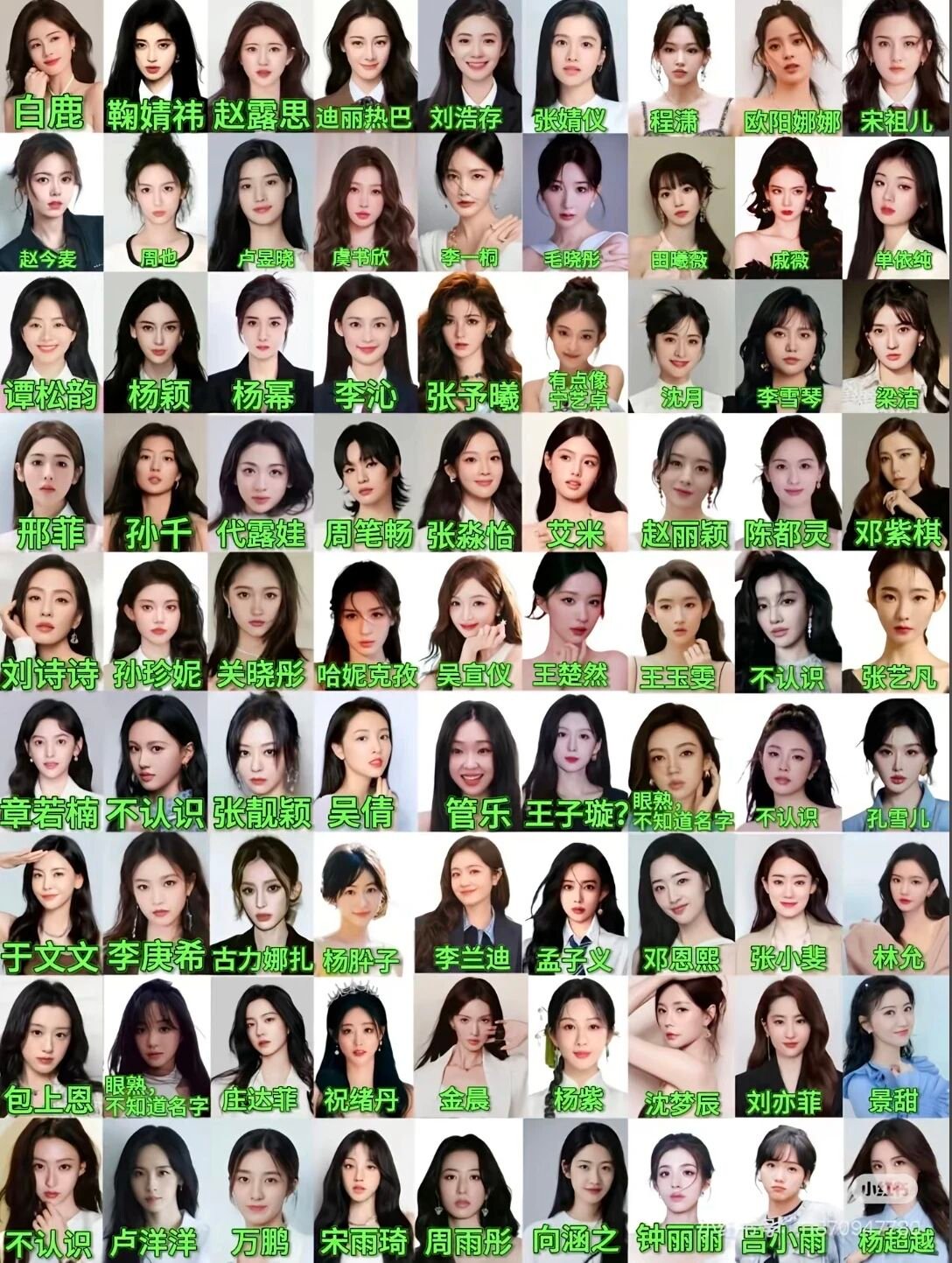
Some people's beauty is something that time can hardly change.
Among the many discussions about old photosLiu YifeiIt's a name that can never be avoided.
In her early photos, her features still retained the softness of a young girl, with a touch of youthful innocence in her eyes and brows, but her bone structure was already very clear. Her long, straight black hair and slightly childish expression made her look more like a quiet and pretty girl on campus, rather than the "fairy sister" that the public later came to know her as.
What's remarkable is that her charisma has remained remarkably consistent throughout her career. Many people are surprised by her old photos not because she's changed drastically, but because she's "almost unchanged." This kind of enduring beauty from childhood to adulthood is extremely rare in the entertainment industry.
Similarly, there are others that evoke a similar feeling.Yang ChaoyueversusChinese character.
Photos of Yang Chaoyue taken casually in a restaurant years ago once circulated online. Without filters, lighting, or even clear image quality, her facial features are almost identical to how they are now. Her natural camera presence makes her easily noticeable even in a crowd.
Tian Xiwei's old photos reveal what true "sweet girl bone structure" really means. The differences before and after her debut are mostly changes in makeup and hairstyle; her highly recognizable big eyes and naturally upturned smile remain almost unchanged. The entertainment industry is not lacking in beautiful girls, but those who can "possess a sense of character even before they've debuted" are actually quite rare.
This natural advantage of "time not being significantly altered" is often a key reason why they are able to quickly build a fan base.
Rather than whether they "become more beautiful," the public cares more about whether the growth is natural.
Compared to the type that "has hardly changed", another type of female star who sparks discussion are those whose growth is clearly visible, but whose changes are very natural.
Zhao LusiThat's a typical example.
Her student photos always had a strong girl-next-door feel. Her round facial features and slightly shy expression when she smiled are not fundamentally different from how she appears on screen today. Many people who later looked back at her old photos before entering the entertainment industry found that her changes came more from a more mature temperament and upgraded makeup and styling, rather than from the structure of her facial features themselves.
It is precisely because of the naturalness of this "growth logic" that the so-called "plastic surgery controversy" surrounding her has always lacked persuasiveness. Audiences don't actually reject change; what truly easily sparks doubt is the lack of a sense of process in the change. Zhao Lusi's state is more like that of an ordinary girl gradually finding a suitable way of expression as she grows older, gains experience on camera, and adapts to the industry environment.
Yu ShuxinThe same is true.
In her pre-debut school photos, her face still showed obvious baby fat and girlish innocence, with a sweet and relaxed smile, which is indeed different from her current appearance in variety shows and film and television works. However, this difference is not abrupt, but rather very much in line with the natural changes a girl undergoes as she transitions from adolescence to adulthood.
Often, when viewers discuss old photos of female celebrities, what they are really concerned about is not whether they have "changed" or not, but whether such changes reflect a genuine growth trajectory.
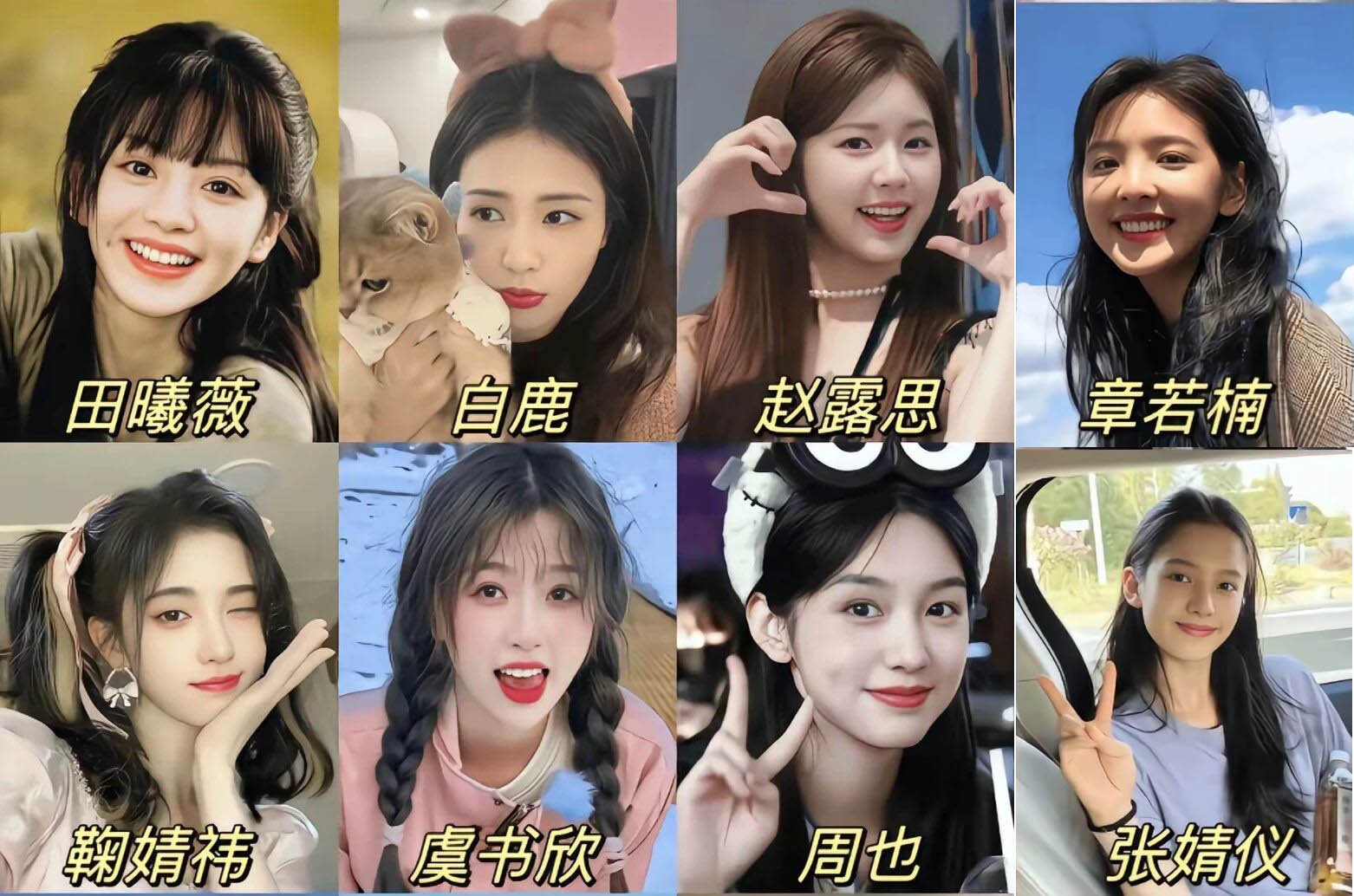
The entertainment industry can enhance beauty, but it cannot create true distinctiveness.
In recent years, the aesthetic standards in the entertainment industry have gradually become more uniform. Exquisite makeup, high-definition retouching, and standardized lighting have made many celebrities' photos increasingly "perfect," but they have also become increasingly lacking in memorability.
Therefore, when netizens rediscover some old photos, it creates a strong sense of contrast.
white deerPhotos from her early days as an internet celebrity are more memorable than heavily edited ones. Back then, she may not have conformed to the most standard "high-class" aesthetic in today's entertainment industry, but her features were vivid, her demeanor vibrant, and she possessed an unadorned charm.
AndZhang JingyiThe old photos, on the other hand, reveal a different kind of quality that is becoming increasingly rare these days—a sense of relaxation.
Her bone structure doesn't belong to the traditionally striking "intense" beauty category, but her gentle eyes, smooth facial lines, and subtly intriguing aura make her highly recognizable in a crowd. Especially after the broadcast of "Ignite Me, Warm You," many people revisited her photos before entering the entertainment industry and discovered that her most attractive quality was never "refined," but rather a comfortable feeling that had been slowly cultivated over time.
Zhou YeIt is of a similar type.
In her early photos, even when she's just wearing a simple gray sweatshirt and standing in poor lighting, she still exudes a strong aura. That slightly aloof yet clean and cool temperament is actually very difficult to completely replicate through training.
The entertainment industry can help artists optimize their image, but it cannot truly create recognizability. Many old photos are memorable precisely because they capture the most original personal qualities of these actresses before they were uniformly packaged.
Old photos are moving because they allow "celebrities" to revert to being "ordinary people."
The entertainment industry today places increasing emphasis on perfection.
High-definition cameras, real-time trending topics, and the harsh realities of social media leave celebrities with virtually no room for "relaxed growth." This is why old photos with a sense of history are so precious.
They make people realize that so-called top female stars didn't start out with their current aura. They also went through the stages that ordinary girls go through: changes in aesthetics, growth in temperament, establishment of self-awareness, and a long process from immaturity to maturity.
And this process itself is more powerful than "perfection".
Because what truly moves people is never flawless perfection, but rather the way a person gradually develops themselves over time.
Those old photos that netizens discuss repeatedly, on the surface, are comparing changes in appearance, but what they actually reflect is the public's renewed longing for "authenticity." As filters become thicker and photo editing becomes more uniform, people are beginning to cherish those slightly blurry, imperfect, yet vibrant moments again.
In a sense, the reason these old photos continue to resonate is not just because the subjects were celebrities.
Because when people look through old photos, they see not only their past appearance, but also the self they can never go back to.

