
"Rainy Night Bell," "The Protagonist," and "Family Business" are competing in the same time slot: Wuxia, serious drama, and female growth are three routes. Which one will become the next hit?

- Advertisement -

In May of this year, a very interesting situation actually emerged in the domestic drama market.

The three dramas, "Rainy Night Bell," "The Protagonist," and "Family Business," correspond to the three core directions of current Chinese dramas: martial arts detective stories, literary realistic dramas, and female-centric historical dramas.

More importantly, they all have one thing in common: none of them are "hollow projects" that simply rely on traffic to generate buzz.

In terms of production team, platform configuration, and market expectations, these three dramas are clearly key projects in today's domestic drama market. Therefore, to some extent, they represent a head-on collision of different approaches to domestic dramas.
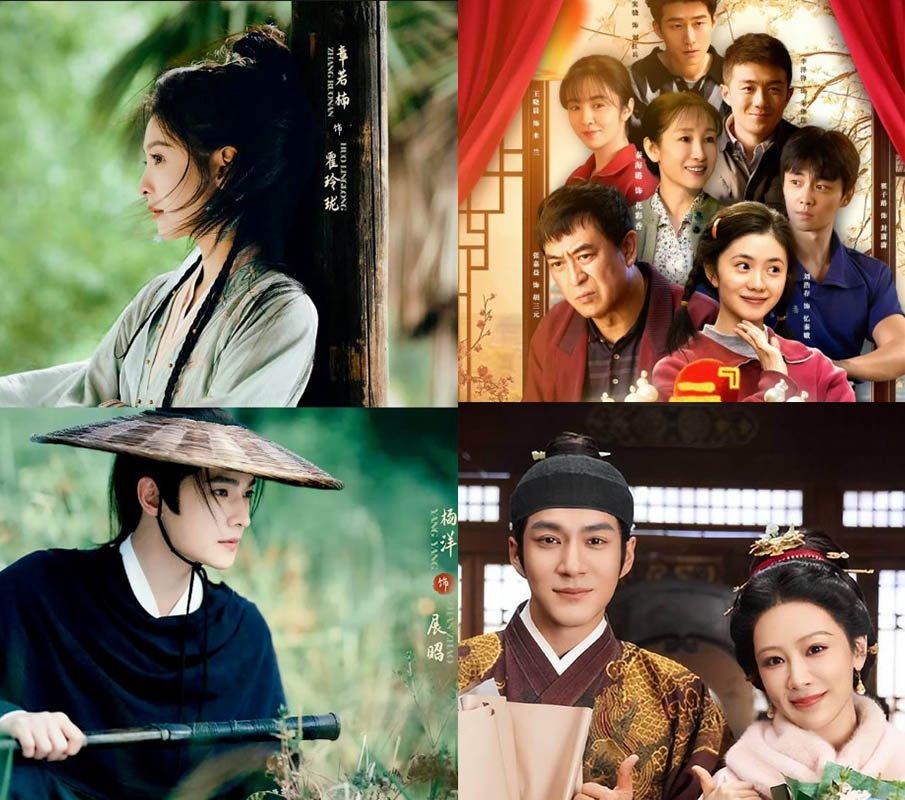
The most discussed topic is obviously "Yu Lin Ling".

Its greatest advantage is actually its "scarcity".

In recent years, there have been fewer and fewer truly serious martial arts dramas. In particular, traditional martial arts dramas that focus on ensemble casts and detective stories are almost becoming a blank genre in Chinese television.

And "Rainy Night Bell" just so happens to be produced by Daylight Entertainment.

This means that audiences will naturally have higher expectations for it. After all, in many people's eyes, Daylight Entertainment has established a stable perception over the years—at least in terms of production quality and overall texture, it is usually not too bad.

Yang Yang's portrayal of Zhan Zhao is seen by many as his most crucial transformation attempt in recent years.

The biggest controversy surrounding Yang Yang in the past has always been clear – he's too "aloof".

Whether it's historical dramas or modern idol dramas, he often pays too much attention to his posture and camera presence, which makes his characters lack a real sense of life and emotional flow.

However, in the content released so far for "Rainy Night Bells", it is clear that he is actively "restraining" his performance this time.

Especially in the scenes of Zhan Zhao in black, the rainy night scenes, and the fight scenes, his overall demeanor is noticeably more imposing and has a stronger sense of the martial arts world than his previous costume dramas that were simply about looking cool.

Moreover, the smartest thing about "Rainy Night Bell" is that it did not portray Zhan Zhao as a "great, glorious, and righteous knight-errant" in the traditional sense.

It emphasizes the characters' struggle between loyalty and rules.

This direction actually suits Yang Yang very well.

Because his natural demeanor has always been one of coolness and restraint. His past problem wasn't that he was unsuitable for period dramas, but rather that he too easily portrayed characters as "idols." However, if the character inherently carries a sense of repression and long-term self-restraint, then his coolness can actually become an advantage.

In addition, Huo Linglong, played by Zhang Ruonan, is also a character that viewers are relatively looking forward to.

In recent years, Zhang Ruonan has actually been gradually shedding her past image of simple youthfulness. Huo Linglong in "Rainy Night Bell" is no longer the traditional ancient costume drama heroine waiting to be saved, but a character with a clear sense of chivalry and initiative.

Therefore, what this drama is truly worth looking forward to is not just the chemistry between the main characters, but whether the relationships between the characters and the overall atmosphere of the martial arts world can actually be made believable.

Of course, the risks of "Rainy Night Bell" are also obvious.

The biggest fear for martial arts films these days is "hollowing out."

If the action scenes lack a sense of real power and the pace of the investigation is not sustained, then even if the atmosphere is strong in the early stages, it is easy for the show to quickly decline after a strong start.

In comparison, "The Protagonist" is the most "stable" of the three dramas.

Because from the very beginning, it wasn't designed according to the logic of creating viral hits.

With the Mao Dun Literature Prize IP, Zhang Yimou as producer, Zhang Jiayi at the helm, and the Qinqiang opera theme, this configuration already determines that "The Protagonist" is more focused on word-of-mouth and awards than on short-term trending topics.

The true core of "The Protagonist" is actually "the fate of the characters".

It doesn't simply tell the story of a strong female protagonist's rise to power, but rather the ups and downs and struggles of opera actors throughout an entire era.

The casting of Liu Haocun as Yi Qin'e was indeed quite controversial at first. Many people worried that she was too young and lacked the temperament to truly carry the weight of the era.

Objectively speaking, Liu Haocun's natural vulnerability is actually quite suitable for Yi Qin'e.

Because this character is not a sharp-tongued person, but someone who lives a life of long-term repression, forbearance, and silence.

Judging from the training content and Reuters' reports, she has indeed put in a lot of effort this time.

Whether it's the Qinqiang opera style, the dialect, or the changes in temperament brought about by the age span, it's all significantly more complex than the simple youthful roles she played in the past.

The biggest advantage of "The Protagonist" is actually its cast.

With a cast like Zhang Jiayi, Qin Hailu, Dou Xiao, and Wang Likun, the show naturally gains a sense of depth and realism.

Therefore, it may not dominate the trending searches every day like popular dramas, but it is likely to become the one with the strongest lasting positive word-of-mouth after its release.

As for "Family Business," it is the most typical "platform drama" among the three.

Women's growth, family relationships, business battles, intangible cultural heritage... these are almost all the elements that platforms favor most today.

What's really smart about Yang Zi is that she's no longer stuck in the simple sweet girl image, but is clearly starting to move towards the direction of a "career woman".

After "The Beauty of the Country", she has gradually developed a stable national-type ancient costume heroine temperament.

"Family Business" revolves around the Huizhou ink industry, which naturally creates a sense of cultural atmosphere.

Compared to typical palace intrigue dramas, this series places greater emphasis on how women find their place within traditional industries and family rules. Therefore, its overall tone is more substantial than that of purely romance-themed period dramas.

In addition, Han Dongjun has become an unexpected and anticipated part for many viewers.

Because he always carries a somewhat old-fashioned, vintage feel, he is very suitable for works with a traditional industry background.

His pairing with Yang Zi is not the typical industrialized sweet romance couple route nowadays; instead, it's more like a relationship between adults growing together.

However, "Family Business" is also the one most likely to fall into a cliché among the three dramas.

There are already too many historical dramas about women's growth these days. If the later episodes revert to the standard template of "business + romance + triumph," then it's easy for it to lose its truly unique appeal.

Overall, these three dramas actually hit different directions in the domestic drama market.

"Rainy Bells" is betting on the revival of martial arts and atmosphere;

The protagonist is gambling on its literary merit and the depth of its characters;

"Family Business" is betting on the platform's most mature and stable route for major dramas.

If we only consider the stability of word-of-mouth, "The Protagonist" is obviously the safest; if we talk about the easiest way to become popular in a short time, "Rainy Night Bell" has the biggest advantage; and in terms of the potential to become a hit on the platform, "Family Business" is probably still the most like a "national hit drama".

- Advertisement -

From youthful romance to genre-specific explorations: Xing Fei is entering a more stable phase of development.

In today's fiercely competitive market for new-generation actresses, Xing Fei has always been a name with a rather unique presence. Unlike some popular young actresses who frequently dominate trending topics, she rarely relies on intensive marketing to create buzz. However, her exposure in the film and television industry has remained consistently stable over the years. From sweet campus romances to period dramas about growing up, and now gradually exploring fantasy and emotional themes, her development trajectory, while not radical, clearly shows a slow and continuous evolution. Rather than a short-term surge in popularity, Xing Fei seems to be searching for a long-term positioning that suits her. After "Put Your Head on My Shoulder," Xing Fei has never left the public eye. For most viewers, "Put Your Head on My Shoulder" remains their most familiar work. Years after its release, this drama remains one of the most frequently mentioned representative works of domestic youth romance dramas. It wasn't a "blockbuster" in the traditional sense, but it maintained a stable reputation for a long time thanks to its relaxed and natural atmosphere, comfortable character relationships, and a highly realistic portrayal of youthful romance. It was during this period that Xing Fei's "sweet girl" image was officially established by the public. Her appearance doesn't belong to the aggressive, striking type; instead, it leans more towards natural, approachable, and relaxed. This quality is a natural advantage in campus dramas and light idol dramas, allowing her to accumulate a stable audience in the youth romance genre. However, this type of role can also easily lead to a fixed image. As the number of domestic romance dramas continues to increase, audiences are gradually becoming fatigued with formulaic character settings and industrialized expressions of romance. For actors, staying in a single genre for too long can easily limit their development. Xing Fei's changes in the past two years are precisely reflected in her gradually shedding this repetitiveness. "Crazy Kagura Village" continues the advantages of light comedy, but it's no longer just about the traditional sweet girl. One of Xing Fei's more anticipated new works is the modern fantasy light comedy "Crazy Kagura Village," co-starring with Huang Junjie. The drama was previously filmed in Yunnan, and from the currently released information, the overall style is light and absurd, blending fantasy and comedy elements with a distinctly realistic feel. Compared to her previous common campus sweet girl image, this character is noticeably more quirky and mischievous, with more comedic expression and a greater sense of the character's state, rather than simply revolving around a romance storyline. In fact, light comedy has always been Xing Fei's area of ​​relative strength. Her acting style isn't overtly extroverted, nor is she an actress known for strong dramatic conflict, but her naturalness in everyday life, slice-of-life scenes, and relaxed atmospheres is often quite prominent. This "closeness" makes it easier for the audience to empathize. Therefore, while *Crazy Kagura Village* may not be a traditional big-budget production, for Xing Fei, it's more like an extension of her existing comfort zone. *Her Pupil* Signals a New Transformation Compared to the lighter *Crazy Kagura Village*, another new drama, *Her Pupil*, presents a completely different feel. Previously, it was mistakenly titled *Her Eyes* online, but current public information shows the official title is *Her Pupil*, with the English title *In Her Eyes*. Starring Huang Xiyan and Xing Fei, the drama is positioned as a modern fantasy, suspense, and emotional redemption story. Judging from the currently released concept materials, this work is clearly different from Xing Fei's typical campus romance dramas. The overall atmosphere is more mature, and it places greater emphasis on the expression of characters' emotions and psychology. However, it's important to note that *Her Pupil* isn't purely realistic; it's a modern fantasy romance drama with a distinctly surreal setting. Therefore, its more accurate meaning isn't a "complete shift to realistic themes," but rather that Xing Fei is beginning to explore more genre-specific and emotionally charged works beyond sweet romance. This shift was already evident in *The Years of Reincarnation*. In *The Years of Reincarnation*, she began to try roles with a sense of growth, repression, and emotional depth, no longer relying solely on "sweetness" to drive the character's charm. Although she's not a traditionally strong, leading lady, she has gradually established a new versatility in more introverted and emotionally charged roles. Xing Fei's problem isn't a lack of audience appeal, but rather a lack of truly breakout roles. For years, Xing Fei has been in a somewhat delicate position. She doesn't lack recognition and has a stable audience base, especially among idol drama viewers and in overseas markets, where she has maintained goodwill. But at the same time, she has never truly entered the core competitive tier of "top-tier actresses." To some extent, this is related to her own image and style. Today's entertainment landscape increasingly relies on high exposure, high controversy, and sustained buzz. Xing Fei isn't the type of actress who's overly aggressive or prone to creating media attention. Her overall style is low-key, and her team's marketing is relatively restrained. Therefore, while she lacks explosive popularity, she has consistently maintained a stable fan base. The advantage of this approach is relatively low risk, making it less likely to lose market share due to negative public opinion; however, the disadvantage is the lack of a true "breakthrough." She has always been in a state where "many people know her, but she's always lacking a truly groundbreaking work." Rather than focusing on short-term popularity, she seems to be slowly establishing her own rhythm. Looking at Xing Fei's development now, it's clear she has gradually moved away from simply relying on campus idol dramas to maintain her popularity. She's begun to try fantasy themes, coming-of-age roles, and works that emphasize emotional expression, while also reducing her past highly repetitive sweet romance formula. Although this transformation is still a relatively slow process, it at least shows that she is actively seeking longer-term development opportunities. In fact, not all actors need to become top stars. For some actors, consistently producing quality work, maintaining audience appeal, and gradually broadening their role types are also paths to long-term survival. Xing Fei's current situation is increasingly approaching this type. She may not generate the most buzz, but she's never truly disappeared from the market's view; she may not have the most exaggerated online traffic, but her approachability and natural charm maintain a stable appeal to idol drama audiences. Whether she can achieve significant career advancement in the future may not depend solely on marketing and exposure, but rather on finding a role that truly suits her style and allows her to further solidify her image in the audience's perception. For actors like Xing Fei, with a clear style and stable audience appeal, a truly suitable project is often more important than continuous, high-frequency exposure.

From Old Photos to Top Stars: The Overlooked Sense of Growth Behind Female Celebrities' "Looks Contrast"

The entertainment industry is never short of beauties, but what truly sparks sustained public discussion is often not the meticulously edited photos on the red carpet, but rather those old photos that are suddenly unearthed. When a student photo from many years ago, a set of slightly dated studio portraits, or even a blurry candid shot reappears online, the first things people seem to discuss are "has she changed?", "is she all-natural?", and "what did she look like when she was young?" But more than simple comparisons of looks, what truly captivates these old photos is that they allow the public to see for the first time: those top female stars standing in the spotlight also had ordinary moments before the entertainment industry packaged them. They didn't have today's sophisticated makeup and styling systems, precise camera management, or the highly standardized aesthetic templates of the social media age. In those photos, they wore the most ordinary clothes, had hairstyles popular in their student days, and even their poses were somewhat awkward and unskilled. It is precisely because of this that they present a sense of authenticity that is increasingly rare today. Some people's beauty is almost unchanging with time. Among the many discussions about old photos, Liu Yifei is always an unavoidable name. In her early photos, her features still retained a youthful softness, with a touch of naivety in her eyes and brows, yet her bone structure was already very clear. Her long, straight black hair and slightly childish expression made her look more like a quiet, pretty girl on campus than the "fairy sister" she later became known to the public. What's remarkable is that her aura has remained remarkably consistent throughout her career. Many people are surprised by her old photos not because of drastic changes, but because she "has hardly changed." This kind of consistent beauty from childhood to adulthood is extremely rare in the entertainment industry. Yang Chaoyue and Tian Xiwei evoke similar feelings. A candid photo of Yang Chaoyue taken in a restaurant in her early years circulated online. Without filters, lighting, or even clear image quality, her facial contours are almost identical to now. That natural camera presence makes her easily noticeable even in a crowd. Tian Xiwei's old photos, on the other hand, reveal what truly constitutes a "sweet girl bone structure." The differences before and after her debut are mostly changes in makeup and hairstyle; her highly recognizable big eyes and naturally upturned smile remain almost unchanged. The entertainment industry is not lacking in beautiful girls, but those who can "possess a sense of character even before they became famous" are actually quite rare. This natural advantage of "not being significantly altered by time" is often a key reason why they can quickly build audience appeal. Rather than "whether they've become more beautiful," the public cares more about whether the growth is natural. Compared to those who "have almost no change," another type of female star who sparks discussion are those whose growth is clearly visible, yet the process of change feels very natural. Zhao Lusi is a typical example. Her photos from her student days always had a strong girl-next-door feel. Her round facial lines when she smiles, and her slightly shy expression, are not fundamentally different from her current on-screen appearance. Many people who later revisited her old photos before entering the industry find that her changes come more from a more mature temperament and upgraded makeup and styling, rather than the structure of her facial features themselves. It is precisely because of this natural "growth logic" that the so-called "plastic surgery controversy" surrounding her has always lacked persuasiveness. Audiences aren't actually averse to change; what truly sparks criticism is the lack of a sense of process in the change. Zhao Lusi's current state is more like an ordinary girl gradually finding her own way of expression as she grows older, gains experience in front of the camera, and adapts to the industry environment. Yu Shuxin is similar. In her pre-debut school photos, her face still retains a noticeable baby fat and girlish innocence, her smile sweet and relaxed—a difference from her current appearance in variety shows and film/television works. However, this difference isn't jarring; rather, it perfectly reflects the natural changes a girl undergoes as she transitions from adolescence to adulthood. Often, when audiences discuss female celebrities' old photos, they're not really concerned with whether they've "changed," but rather whether this change reflects a genuine growth trajectory. The entertainment industry can enhance beauty, but it can't create true distinctiveness. In recent years, the aesthetics of the entertainment industry have gradually become uniform. Exquisite makeup, high-definition retouching, and standardized lighting make many artists' photos increasingly "perfect," but also increasingly lacking in memorability. Therefore, when netizens rediscover some old photos, it creates a strong sense of contrast. Bai Lu's early photos as an internet celebrity are more memorable than her heavily retouched later images. Back then, she might not have conformed to the current entertainment industry's most standard "high-class" aesthetic, but her features were vivid, her demeanor vibrant, and she possessed an unadorned charm. Zhang Jingyi's old photos, on the other hand, showcase a different kind of quality that is increasingly rare these days—a relaxed quality. Her bone structure doesn't belong to the traditionally striking "intense" type, but her gentle eyes, smooth facial lines, and subtly story-telling aura make her highly recognizable in a crowd. Especially after the broadcast of "Ignite Me, Warm You," many people revisited her pre-entry photos and discovered that her most attractive quality was never "refined," but rather a comfortable feeling that had been slowly cultivated over time. Zhou Ye is a similar type. In her early photos, even wearing a simple gray sweatshirt and standing in poor lighting, she still exudes a strong sense of atmosphere. That slightly aloof yet clean and cool aura is difficult to completely replicate through training. The entertainment industry can help artists optimize their image, but it cannot truly create recognizability. Many old photos are memorable precisely because they record these actresses' most original personal qualities before they were uniformly packaged. The appeal of old photos lies in their ability to bring "celebrities" back to being "ordinary people." Today's entertainment industry increasingly emphasizes perfection. High-definition cameras, real-time trending topics, and the judgment of appearance on social media leave celebrities with virtually no room for "relaxed growth." This is why old photos, imbued with a sense of nostalgia, are so precious. They remind us that so-called top female stars didn't always possess their current aura. They too went through stages that ordinary girls experience: evolving aesthetics, developing their personalities, establishing self-awareness, and the long process of maturing from naivety. This process itself is more powerful than "perfection." Because what truly moves people is never flawless refinement, but rather the gradual shaping of a person over time. Those old photos repeatedly discussed by netizens, ostensibly comparing changes in appearance, actually reflect a renewed longing for "authenticity." As filters become thicker and retouching more uniform, people are beginning to cherish those slightly blurred, imperfect, yet vibrant moments. In a sense, the reason these old photos continue to resonate is not simply because the subjects are celebrities. Because when people look through old photos, they see not only their past appearance, but also the self they can never go back to.

Two different paths emerged from the film "Cry Me a Sad River": Zhang Ruonan is increasingly resembling a "national leading lady," while Ren Min is moving closer to becoming a more serious actress.

Many people who rewatch "Cry Me a Sad River" later find that this film is quite unique. It not only brought a story originally geared towards the youth literature circle into the mainstream, but also made Ren Min and Zhang Ruonan memorable to a large audience for the first time. The film is adapted from Guo Jingming's novel of the same name, directed by Luo Luo, and produced by Guo Jingming. When it was released, it generated considerable discussion, and Ren Min's Yi Yao and Zhang Ruonan's Gu Senxiang almost officially entered the competition among the post-95 actresses around that time. Interestingly, however, their paths were completely different from the beginning. Ren Min represented "character portrayal," while Zhang Ruonan leaned more towards "atmosphere." This difference was already very evident during the "Cry Me a Sad River" era. When Zhang Ruonan played Gu Senxiang, many viewers' first reaction wasn't "how amazing her acting was," but rather "this girl has such a pure and innocent charm." Her face naturally possesses a clean, gentle, and protective quality. On screen, she easily creates a unique atmosphere characteristic of youth films. This advantage almost entirely determined her subsequent career path. Over the years, Zhang Ruonan has consistently built a strong audience following, whether in modern urban dramas or romance series. Her lightness and approachability perfectly align with the current aesthetic preferences of platforms for "national heroines." "Yu Lin Ling" is a crucial step for her. Huo Linglong is significantly different from her past roles that leaned towards the "white moonlight" archetype. This character not only possesses a江湖 (jianghu, a term referring to the world of martial arts and chivalry) spirit but also carries a complex fate involving elopement, revenge, and being drawn into conspiracies. Therefore, compared to her past roles that relied solely on youthful charm and romantic chemistry, Huo Linglong requires considerable depth. Judging from the current releases, Zhang Ruonan is actively adjusting. She's consciously toning down her performance, no longer emphasizing lightness and girlishness, but attempting to convey a sense of weariness and wariness stemming from being constantly burdened by fate. However, objectively speaking, her current problem remains the same: the camera too easily focuses on her face and overall aura. Often, audiences feel she's "perfectly suited for the role," but don't necessarily immediately recognize her as a "talented actress." This is because Zhang Ruonan essentially prioritizes "star power." Her greatest strengths have always been her public appeal, on-screen chemistry, and commercial appeal. The significance of *Yu Lin Ling* for her lies in the fact that it marks her first true entry into a large-scale historical drama ensemble piece. Previously, she was better suited to urban romance and youthful roles. But now, she's beginning to attempt to portray characters with a more complex,江湖 (jianghu, a world of martial arts and chivalry) feel and intricate fates. This, to some extent, signifies her gradual shift from a "youthful, innocent" image towards a true leading lady. In contrast, Ren Min takes a completely different path. From the beginning, she wasn't an actress who relied on "visual impact." Ren Min's greatest strength has always been the depth of her characters. This was already evident in *Cry Me a Sad River*. What moved audiences most about her portrayal of Yi Yao wasn't her appearance, but the sensitivity and vulnerability born from long-term repression and hurt. This "long-term pain" later became almost Ren Min's most consistent acting strength. Take Gu Jinchao from "The Legend of Qin" as an example. This character is a complex figure within a system of rebirth, domestic intrigue, and power struggles, which severely tests an actor's ability to truly "suppress" their emotions. Gu Jinchao isn't a typical "powerful female lead" from a wish-fulfillment novel. She embodies a sense of defensiveness and insecurity stemming from long-term neglect and suppression. This is precisely Ren Min's forte. She rarely delivers dramatic outbursts in her acting, preferring to keep her characters in a state of "enduring," "suppressing," and "enduring long-term pain." This approach easily makes the characters feel real. This is also true for realistic dramas like "Family Court." Ren Min's advantage in realistic dramas is quite evident. Compared to many actresses born in the 95s, she makes it easier for the audience to feel that "this person truly exists in real life." This sense of realism and resilience makes her increasingly suitable for period dramas, realistic dramas, and characters with high emotional intensity. Therefore, the development directions of both actresses are becoming increasingly clear. Zhang Ruonan is moving towards becoming a "platform-promoted leading actress." She possesses a stable public image, fashion resources, on-screen chemistry, and commercial value, and increasingly aligns with the current platform's standard aesthetic for a leading lady. Ren Min, on the other hand, is clearly becoming more of an "actress-type actress." She may not always be at the top of the trending searches, but many roles that truly require emotional depth and a sense of realism will increasingly need actresses like her. Simply put: Zhang Ruonan's biggest advantage now is her commercial reach and audience appeal; while Ren Min's true strength lies consistently in her emotional depth and the completeness of her characters.

Yang Zi's "The Year I Refused to Marry the East Wind" is generating buzz even before its release: From a popular young actress to a period drama heroine, she has finally entered the most suitable stage.

If there's one type of actor in the Chinese entertainment industry most easily described as "working year-round without rest," Yang Zi would definitely be near the top. Over the years, she has almost consistently maintained a high-intensity filming schedule. As soon as one project finishes promotion, the next new drama quickly enters the preparation or filming stage. From historical romance dramas and modern romance dramas to contemporary dramas, she has consistently maintained extremely high exposure, thus long holding a core position among the platform's leading actresses. Recently, with the official announcement of the adaptation of her new drama "I Won't Marry the East Wind," this work has quickly become one of the most discussed new projects among upcoming historical dramas. Compared to ordinary historical romance dramas, "I Won't Marry the East Wind" carries a strong emotional tone from its title alone. "I Won't Marry the East Wind" comes from He Zhu's poem "Ta Sha Xing: Willows Returning to the Pond" in the Song Dynasty, using the lotus flower as a metaphor to express a proud sense of not wanting to drift with the tide and not easily bowing to fate. The most attention-grabbing aspect of this drama lies precisely in its departure from the traditional "romance-first" framework of historical romance dramas. Based on currently available information, it clearly leans more towards the themes of female growth and the fate of the era. The story's background has a strong sense of the times, and the relationships between the characters involve both family oppression and the struggles and awakenings of women caught in the cracks of the era. Therefore, compared to ordinary sweet romance dramas, the whole series is more like a period drama with a female ensemble cast. This is why many viewers feel that "The Way We Were" is actually very suitable for Yang Zi now. Because her current career stage is different from the past. In her early years, Yang Zi was always perceived as a typical "hard-working actress." She had a strong emotional output, especially in crying scenes and explosive scenes, which she always delivered with great intensity. At that time, she relied more on the intensity of her emotions to quickly establish the character's appeal, so whether it was "Ashes of Love" or her later contemporary romance dramas, there was always a clear trace of "strong emotional performance." This approach was certainly effective and did help her build a large audience base. But the problem is that as age and the types of roles change, if an actor always stays in the "emotional outward expression" stage, it is easy to start to develop a formulaic performance. And Yang Zi's biggest change in recent years is precisely here. She has begun to learn to "restrain" her performance. Compared to her past pursuit of intense performances, she now clearly places greater emphasis on the nuances of a character's state and emotions. This shift began to emerge during her time in "The Beauty of the Country," and it seems even more pronounced in "The Day I Won't Marry the East Wind." Judging from the currently released images, her overall style has completely departed from her previous girlish approach. Whether it's the cheongsam, the curls, or the overall makeup and styling, she's clearly moving towards the repressed, restrained, and resilient qualities of women from the Republican era. Many viewers will notice that Yang Zi is now gradually able to carry off the aura of a "period-era heroine." This is crucial because she's currently at a delicate stage—no longer suited to purely girlish roles, yet not yet truly entering the traditional "leading lady" phase. Roles with historical context, themes of female growth, and the ups and downs of fate are more likely to bring out her maturity. Therefore, the high expectations for "The Day I Won't Marry the East Wind" aren't solely due to Yang Zi's popularity. More importantly, the drama's atmosphere perfectly aligns with her current development path. Furthermore, the production quality of this drama has further raised market expectations. The project is produced by Daylight Entertainment, with Hou Hongliang as producer. From *Nirvana in Fire* to *The Story of Minglan*, Daylight Entertainment has long established a stable reputation for high-quality domestic dramas. The fact that Ming Yueqing, the original author of *The Story of Minglan*, personally participated in the screenwriting has reassured many fans of the original work. After all, the most common problems with costume drama adaptations in recent years are drastic changes, padding, and character inconsistencies. The author's involvement largely means that the work will retain the core essence of the original work. In addition, the current female-oriented market has a stable demand for the "domestic intrigue + growth + contemporary feel" genre. Therefore, *The Story of Minglan* has possessed considerable potential for generating buzz since its inception. For Yang Zi, this drama may be more than just another upcoming project. Current platforms have essentially accepted her as an actress who can "carry a drama." She may not always be the most popular, but she has a very stable advantage—audience appeal. Many people may not be her core fans, but whenever Yang Zi has a new drama airing, viewers are willing to click to watch it. This casual audience and the trust built up over time are actually far more important than simple fan data. Therefore, "The Years When She Refused to Marry the East Wind" feels like an important step for Yang Zi in further developing her "period drama heroine" image after "The Beauty of the Country." If the script and production can truly hold up, it might actually become a significant turning point for Yang Zi as she gradually transitions from a "traffic star" to a nationally recognized actress.

random

Why did Yang Yang's portrayal of Zhan Zhao spark such a huge discussion? "The Legend of the Condor Heroes" is reshaping the image of the "Southern Hero".

After the premiere of "The Legend of the Condor Heroes," Yang Yang's portrayal of Zhan Zhao quickly became one of the most talked-about topics in the entire series. This is not only because Zhan Zhao is a classic character with immense national recognition in Chinese martial arts films and television, but also because this time, Zhan Zhao is no longer just a supporting character in the "Justice Bao" system, but a true protagonist. Many viewers are familiar with Zhan Zhao from various versions of "Justice Bao." In those stories, he is Bao Zheng's most important bodyguard and a core figure maintaining "justice and order." He is highly skilled in martial arts, loyal and righteous, and calm and restrained; therefore, "Imperial Cat Zhan Zhao" has become one of the most profound memories of classical knights-errant for a generation of viewers. However, "The Legend of the Condor Heroes" clearly takes a different approach. Adapted from the "Three Heroes and Five Gallants" system, the series incorporates a large number of original martial arts and political intrigue storylines, truly focusing the story on the "Southern Knight" himself. In the drama, Zhan Zhao, possessing crucial evidence of the Prince of Xiangyang's rebellion, is simultaneously hunted by the imperial court and various martial arts factions. He is no longer just the "stable hero" who always stands behind Bao Zheng, but a central figure forced into a huge conspiracy, constantly struggling to survive between the martial arts world and the imperial court. Because of this, this version of Zhan Zhao is younger and more imbued with the spirit of the martial arts world than before. Yang Yang's portrayal of Zhan Zhao is distinctly different from the traditional image familiar to the audience from the very first appearance. The production team downplayed the classic red-robed "Imperial Cat" look, instead using a large amount of black clothing, bamboo hats, high ponytails, and black and gold wristbands, giving the character a more wandering, chivalrous feel. Especially in night scenes and action sequences, the aura of a lone wanderer constantly surrounded by danger is further amplified. Judging from the feedback from the current broadcasts, the audience's approval of Yang Yang's Zhan Zhao is primarily focused on his appearance and action performance. Yang Yang himself is a very typical "ancient costume actor with a strong bone structure." His facial features are three-dimensional, his posture is stable, and coupled with the physical control gained from long-term dance training, his overall presence is naturally more convincing than many other actors when the character enters a martial arts scene. Especially in the scenes of sword wielding, acrobatics, light-footed skills, and battles in the rain, the traces of pre-production action training are clearly visible. Many viewers therefore believe that "The Legend of the Condor Heroes" finally recaptures the "man and sword as one" essence of traditional martial arts, rather than relying entirely on post-production special effects. Compared to the more mature and weighty heroines of the past, Yang Yang's version of Zhan Zhao emphasizes a "youthful chivalrous spirit." This youthful spirit is not just about age, but a coldness and sharpness in the character's state. He retains Zhan Zhao's original righteousness, but at the same time, he has added a sense of loneliness and repression. In many scenes, Zhan Zhao is constantly running away, constantly fighting, and constantly losing trust, so the character is colder than traditional versions and closer to the "tragic hero" route that audiences prefer today. Because of this, many viewers will naturally compare Yang Yang with previous versions of Zhan Zhao. And among all the versions, the most influential is still He Jiajin. He Jiajin's version of Zhan Zhao in the 1993 "Justice Bao" is still regarded by countless viewers as an unsurpassable classic. The real strength of that version wasn't just its appearance, but how naturally it portrayed Zhan Zhao's "gentlemanly" qualities. He Jiajin's Zhan Zhao was composed, gentle, and restrained, yet always exuded a strong sense of security. He wasn't overtly aggressive, but instantly convinced viewers that he was a true man who would draw his sword for the people. Many viewers of that era even felt that "Royal Cat Zhan Zhao" wasn't just a character, but a symbol of an idealized personality. In contrast, Jiao Enjun's version leaned more towards handsome and scholarly. His Zhan Zhao possessed both the temperament of a scholar and the sharpness of a knight-errant, thus remaining popular with younger audiences. Lu Liangwei's version emphasized the gravitas and mature aura of a traditional hero, while Yan Yikuan's version took a cool, handsome approach, creating a strong visual impact, but due to the limited influence of the work itself, it didn't achieve widespread popularity. In a sense, Yang Yang's current version of Zhan Zhao is actually reinterpreting this classic character in a more modern way. He is no longer just the eternally stable and righteous "Royal Cat" in the traditional sense, but more like a young swordsman who still retains his youthful sharpness and constantly struggles between reality and ideals. He gets hurt, doubts, feels lonely, and wavers between rules and loyalty. This approach is actually very much in line with the changing aesthetic of today's audiences regarding martial arts characters. Because today's audiences are no longer satisfied with "perfect heroes." They want to see the flaws and complexities in characters. However, objectively speaking, the current recognition of Yang Yang's version of Zhan Zhao is still mainly focused on aspects such as "image fit," "beautiful action scenes," and "strong sense of the martial arts world." What truly determines whether this version can enter the classic category is the degree to which the character's spirit and temperament are fully realized. Because the most difficult part of portraying Zhan Zhao has never been his high level of martial arts skills. It is that he is: gentle yet unapproachable; restrained yet always retaining his sharpness; within the rules, yet still willing to draw his sword for the weak. Many actors can play "handsome swordsmen," but it is difficult to truly portray the "gentlemanly chivalry" of Zhan Zhao. And this is precisely Yang Yang's biggest challenge. If the later plot of "The Legend of the Condor Heroes" can truly establish Zhan Zhao's struggle between responsibility, loyalty, rules, and personal beliefs, then this version of Zhan Zhao may very well become the most representative reinterpretation in recent years. This is because it's not merely a replication of a classic, but a re-answering of the question—when the "Imperial Cat" returns to the martial world, what kind of person will he become?

Namgoong Min and Lee Seol's new drama "The Completion of Marriage" is scheduled to premiere in July, marking the return of KBS weekend miniseries after a five-month hiatus.

On May 14th, according to Korean media reports, the new drama "The Completion of Marriage" (tentative title), starring Namgoong Min, Lee Seol, and Kim Dae-myung, has officially confirmed its broadcast time. It will premiere on July 4th at 9:20 PM as a new weekend mini-series on KBS2. KBS subsequently confirmed the news, stating that "The Completion of Marriage" will officially take over the time slot, meaning that KBS2's weekend mini-series will return after a hiatus of approximately five months. Previously, KBS2's weekend mini-series had been in a slump after "To My Dear Thief" concluded its run in February. Therefore, the release of "The Completion of Marriage" is seen as one of KBS's key projects in revitalizing its weekend drama slot. In terms of subject matter, "The Completion of Marriage" is not a traditional romance drama, but rather a thriller-romance drama that blends suspense, crime, and marital relationships. The story revolves around a couple on the verge of divorce. Just before the divorce proceedings are finalized, the wife is suddenly kidnapped, forcing the husband into a dangerous and brutal chase. To rescue his wife, he must confront a ruthless criminal organization. The most distinctive feature of the entire drama lies in its combination of "marital crisis" and "crime suspense." Rather than simply emphasizing love, *The Completion of Marriage* is more about re-examining marital relationships under extreme circumstances. When a marriage on the verge of collapse suddenly faces a life-or-death crisis, the long-suppressed emotions, guilt, and obsessions between the characters are forced out. This type of emotionally charged subject matter has always been one of Namgoong Min's forte. In this drama, he plays a former neurosurgeon, now the hospital director. On the surface, his career is stable and his life respectable, but after his wife is kidnapped, his life quickly spirals out of control, and he begins a life-or-death investigation. Compared to the calm and collected roles Namgoong Min often plays in the past, this character is clearly more focused on the sense of oppression and survival in dire circumstances. Li Xue plays the kidnapped wife. Although not much about the specific details of her character has been revealed yet, judging from the story structure, she is clearly more than just a "rescued" character. Especially considering the title's strong relevance to marital relationships, many viewers speculate that the drama may not merely discuss the crime itself, but rather the long-standing rifts and emotional truths between spouses. Furthermore, the addition of Kim Dae-myung has heightened anticipation for the overall cast. In recent years, the "suspense + romance" genre has become increasingly popular in Korean dramas, but successfully balancing emotional tension with strong character relationships is no easy feat. Namgoong Min is adept at portraying characters under constant pressure, which explains the considerable attention "The Completion of Marriage" garnered from its initial announcement. Especially after "Lovers," Namgoong Min's career path has become noticeably more consistent in the past two years. He has gradually established his own "quality-oriented leading man" persona. Rather than relying solely on romance or idol appeal, he excels at using details and emotional layers to support his characters, leading to high expectations for the drama's quality. With its July broadcast date confirmed, "The Completion of Marriage" has become one of the most anticipated new Korean dramas of the second half of this year.

The controversy surrounding Xu Kai's contract renewal with Huanyu Entertainment continues to escalate: From a "production line leading man in ancient costume dramas" to a turning point, he really wants to change.

 Recently, the issue of Xu Kai's contract renewal with Huanyu Entertainment has become one of the most discussed topics in the Chinese entertainment industry. Although neither party has officially announced a "contract termination" or "failed renewal," the overall situation recently suggests that Xu Kai and Huanyu are entering a very delicate period. This delicate feeling doesn't just stem from the so-called contract dispute. More importantly, more and more people are beginning to realize that Xu Kai has reached a point where he must transform his career. For the past few years, Xu Kai has been one of the most stable and core male actors in the Huanyu system. Since his rise to fame with "Story of Yanxi Palace," he has almost always remained in the core of the ancient costume drama genre. From "The Legends" and "Ancient Love Poetry" to "Happy Together," regardless of market changes, he has always had stable leading male roles. The reason is actually very straightforward—Xu Kai is too suitable for the camera, especially in period dramas. His appearance is a very typical "talented actor for ancient costume dramas" in the Chinese entertainment industry. With sharp bone structure and clean features, he easily creates a sense of atmosphere in period dramas. In addition, his height, proportions, and demeanor are relatively outstanding, so even if the plot quality is inconsistent, many viewers will still continue to watch dramas because of his face and appearance. To some extent, this is also an important reason why Xu Kai has been able to consistently hold the position of leading man in ancient costume dramas for the past few years. But the problem lies precisely here. Because in recent years, Xu Kai's roles have become increasingly homogenized. Often, viewers remember "Xu Kai is handsome" and "has a charming aura," but it is difficult to truly remember the character itself. Especially as the ancient costume drama market gradually enters a period of fatigue, the requirements of platforms and audiences for actors are also changing. The model of quickly becoming popular simply by relying on "high looks + strong CP chemistry" is becoming increasingly difficult to sustain. Audiences are beginning to care more about whether actors truly have the ability to change and grow in their roles. And this is precisely why the current contract renewal controversy is being amplified. Because many people have begun to realize that if Xu Kai continues to stay in the old, stable cycle of ancient costume dramas, then his freshness is likely to be quickly exhausted. In fact, from the changes in his recent projects, we can already see obvious signs of this. In the past, Xu Kai mostly played the "standard ancient costume idol male lead"—deeply affectionate, restrained, aloof, and perfect. But his new drama "Within 800 Meters" with Deng Enxi is clearly a departure from that direction. The drama leans more towards a realistic suspense, with the plot no longer solely reliant on the romance, and the relationships between the characters filled with a sense of pressure and instability. Xu Kai's character this time is finally beginning to break away from the "perfect, charming male lead" template. From the currently released behind-the-scenes footage and clips, his most obvious change is that he's started to "restrain" his acting. Previously, Xu Kai relied heavily on his outward charm to build his characters. Whether it was his eyes, his low voice, or his emotional expression, he habitually gave the audience a "male lead atmosphere." This approach certainly made it easy to quickly establish chemistry with the character, but over time, it could also make the character seem formulaic. However, in "Within 800 Meters," he has noticeably reduced this formulaic approach. In many scenes, he even deliberately portrays the character as tired, sluggish, and chronically repressed. This change is especially evident in his scenes with Deng Enxi. Deng Enxi doesn't follow the traditional route of a popular young actress. She's been acting since childhood, and her acting style leans more towards realism, with relatively delicate emotional portrayals. Therefore, when the two are on screen together, it's clear that Xu Kai is actively adjusting his pace. He no longer maintains the "most handsome male lead" image as he used to. Instead, in some scenes, he deliberately pauses and avoids eye contact, keeping the character in a state of wariness and instability. This change is crucial because it means Xu Kai is finally starting to try to truly bring his characters to life, rather than just remaining at the level of an idol drama. This also corresponds to his current career stage. Xu Kai's biggest problem isn't a lack of resources, but rather being too easily confined to the historical romance drama system. For the past few years, Huanyu Entertainment has essentially focused on "stable output" for him—stable dramas, stable male leads, and stable popularity. This model is effective in the short term, but in the long run, it gradually diminishes the actor's potential for change. The recent surge in rumors about contract renewal is closely related to this. The outside world has gradually sensed that Xu Kai himself may not want to continue endlessly cycling through the old model. While the online claims of "negotiations falling apart," "resource suspension," and "data maintenance halt" haven't been definitively confirmed, one thing is clear: Xu Kai is no longer simply following Huanyu Entertainment's established production line. The industry's frequent references to the "Bai Lu model" are also quite realistic. For actors with a stable market foundation, what truly matters is not just more roles, but more choice and autonomy. Especially for actors like Xu Kai who have long been in the comfort zone of historical romance dramas, if they can't truly break free from their established path, the risks they face as market tastes change will only become more apparent. Therefore, the real focus of this contract renewal controversy isn't "to sign or not to sign," but whether Xu Kai will use this opportunity to truly end his past reliance on the romantic appeal of historical romance dramas to maintain his popularity.

Lee Yi Kyung's tax evasion has drawn attention, bringing the issue of "one-person companies" owned by South Korean celebrities back into the spotlight of the industry.

South Korean actor Lee Yi Kyung has recently drawn attention due to tax issues surrounding his one-man agency, prompting his agency to issue a formal statement in response. The issue arose from a recent special tax investigation conducted by the Korean National Tax Service into the company established by Lee Yi Kyung. The tax authorities determined that the company, during its operations, treated some of the actor's personal income as corporate income, thus applying a lower corporate tax rate rather than a personal income tax rate. This was deemed a tax treatment dispute, leading to additional tax collection. The news quickly sparked discussion within the South Korean entertainment industry. In recent years, the practice of celebrities establishing one-man companies has been very common in the South Korean entertainment industry. Many actors and singers manage their income, advertising fees, and daily expenses through personal corporations, facilitating asset management and tax and financial planning. However, this model has always been in a gray area between "legal tax avoidance" and "suspected tax evasion." And...

Zhang Linghe and Liu Yuning are expected to be invited to Taiwan for exchanges, a statement by Taiwanese industry figures sparking heated discussion.

Zhang Linghe and Liu Yuning, whose popularity has been steadily rising thanks to period dramas, were recently publicly mentioned by Taiwanese entertainment industry figures who expressed their hope that they would visit Taiwan to hold events and interact with audiences. This topic subsequently sparked discussion on social media platforms across the Taiwan Strait. According to Chinese media outlet China News Network, at the "Cross-Strait Chinese Culture Summit Cross-Strait Performing Arts Cooperation Forum" held on the 11th, Wang Xiangji, the founding chairman of the Taipei Performing Arts Brokerage and Cultural Exchange Association, discussed the influence of mainland Chinese film and television works among young Taiwanese audiences in recent years. He stated that Zhang Linghe, whose popularity has been rising recently due to the period drama "The Jade Emperor," and Liu Yuning, who gained significant attention with "The Waist," both currently enjoy considerable popularity in Taiwan. Therefore, he hoped to invite them to Taiwan to hold performances, meet-and-greets, seminars, and autograph sessions to further promote cross-strait performing arts and cultural exchanges. Following the release of these remarks, keywords such as "Zhang Linghe's visit to Taiwan" and "Liu Yuning's popularity in Taiwan" quickly generated online discussion. In fact, this is not the first time Zhang Linghe's popularity among young Taiwanese audiences has been mentioned. In April of this year, Taiwanese politician Cheng Li-wen, during a visit to mainland China, mentioned that some young Taiwanese people lamented, "Why is cross-strait relations so complicated? Wouldn't inviting Zhang Linghe to Taiwan ease tensions?" This comment quickly gained widespread attention online on both sides of the strait. The recent forum's public mention of Zhang Linghe and Liu Yuning has led many netizens to believe that the influence of mainland Chinese period dramas in the Taiwanese market has indeed been steadily expanding in recent years. Liu Yuning, in particular, has built a large fan base in Taiwan through works like "A Thought Through the Mountains" and "Bend the Waist," as well as OSTs, concerts, and live streams, giving him a stable audience base. Many netizens commented, "I went to Liu Yuning's concert before, and there were so many Taiwanese fans there." "If he could really hold an event in Taiwan, I bet tickets would be hard to get." In contrast, the discussion surrounding Zhang Linghe focuses more on his "suitability for period dramas" and "appeal to young audiences." Due to his obvious advantage in period dramas, coupled with works like "Ning An Ru Meng" and "Zhu Yu: The Jadeite Lord" continuously reinforcing his image as a leading man in period dramas, his popularity among young female viewers in Taiwan has increased significantly in the past two years. Furthermore, his recent appearance in the documentary "Ling Tan Future," showcasing his STEM background and public image, has led many netizens to believe that in addition to his good looks, he possesses a strong sense of "high intelligence" and responsibility, making him more appealing to young audiences. However, as of now, neither Zhang Linghe nor Liu Yuning has officially responded to the news regarding his trip to Taiwan, and related activities remain in the industry exchange and discussion stage. But judging from recent trends, with the continued spread of mainland Chinese period dramas, idol dramas, and variety shows among young people in Taiwan, it has become a significant phenomenon that more and more mainland artists have a stable fan base in Taiwan. Especially in the era of short video platforms and streaming media, the barriers for audiences on both sides of the strait to access film and television content have been continuously lowered, further promoting the cross-regional spread of actors' popularity. Therefore, many industry insiders believe that if conditions for relevant exchanges mature in the future, interaction and cooperation between the entertainment markets on both sides of the strait are likely to continue to increase.
chrysanthemum
chrysanthemum
WangJuHua | 3279 Florence Street Collinsville, TX 76233, Collinsville, TX, United States | admin@360onetravel.com | https://www.facebook.com/AsiaShowbizMovieUpdates | Media & Website Editor focused on content writing, storytelling, and communication. Passionate about sharing ideas through creative and engaging digital content. ✉️ Email | 💬 Facebook Chat

From youthful romance to genre-specific explorations: Xing Fei is entering a more stable phase of development.

In today's fiercely competitive market for new-generation actresses, Xing Fei has always been a name with a rather unique presence. Unlike some popular young actresses who frequently dominate trending topics, she rarely relies on intensive marketing to create buzz. However, her exposure in the film and television industry has remained consistently stable over the years. From sweet campus romances to period dramas about growing up, and now gradually exploring fantasy and emotional themes, her development trajectory, while not radical, clearly shows a slow and continuous evolution. Rather than a short-term surge in popularity, Xing Fei seems to be searching for a long-term positioning that suits her. After "Put Your Head on My Shoulder," Xing Fei has never left the public eye. For most viewers, "Put Your Head on My Shoulder" remains their most familiar work. Years after its release, this drama remains one of the most frequently mentioned representative works of domestic youth romance dramas. It wasn't a "blockbuster" in the traditional sense, but it maintained a stable reputation for a long time thanks to its relaxed and natural atmosphere, comfortable character relationships, and a highly realistic portrayal of youthful romance. It was during this period that Xing Fei's "sweet girl" image was officially established by the public. Her appearance doesn't belong to the aggressive, striking type; instead, it leans more towards natural, approachable, and relaxed. This quality is a natural advantage in campus dramas and light idol dramas, allowing her to accumulate a stable audience in the youth romance genre. However, this type of role can also easily lead to a fixed image. As the number of domestic romance dramas continues to increase, audiences are gradually becoming fatigued with formulaic character settings and industrialized expressions of romance. For actors, staying in a single genre for too long can easily limit their development. Xing Fei's changes in the past two years are precisely reflected in her gradually shedding this repetitiveness. "Crazy Kagura Village" continues the advantages of light comedy, but it's no longer just about the traditional sweet girl. One of Xing Fei's more anticipated new works is the modern fantasy light comedy "Crazy Kagura Village," co-starring with Huang Junjie. The drama was previously filmed in Yunnan, and from the currently released information, the overall style is light and absurd, blending fantasy and comedy elements with a distinctly realistic feel. Compared to her previous common campus sweet girl image, this character is noticeably more quirky and mischievous, with more comedic expression and a greater sense of the character's state, rather than simply revolving around a romance storyline. In fact, light comedy has always been Xing Fei's area of ​​relative strength. Her acting style isn't overtly extroverted, nor is she an actress known for strong dramatic conflict, but her naturalness in everyday life, slice-of-life scenes, and relaxed atmospheres is often quite prominent. This "closeness" makes it easier for the audience to empathize. Therefore, while *Crazy Kagura Village* may not be a traditional big-budget production, for Xing Fei, it's more like an extension of her existing comfort zone. *Her Pupil* Signals a New Transformation Compared to the lighter *Crazy Kagura Village*, another new drama, *Her Pupil*, presents a completely different feel. Previously, it was mistakenly titled *Her Eyes* online, but current public information shows the official title is *Her Pupil*, with the English title *In Her Eyes*. Starring Huang Xiyan and Xing Fei, the drama is positioned as a modern fantasy, suspense, and emotional redemption story. Judging from the currently released concept materials, this work is clearly different from Xing Fei's typical campus romance dramas. The overall atmosphere is more mature, and it places greater emphasis on the expression of characters' emotions and psychology. However, it's important to note that *Her Pupil* isn't purely realistic; it's a modern fantasy romance drama with a distinctly surreal setting. Therefore, its more accurate meaning isn't a "complete shift to realistic themes," but rather that Xing Fei is beginning to explore more genre-specific and emotionally charged works beyond sweet romance. This shift was already evident in *The Years of Reincarnation*. In *The Years of Reincarnation*, she began to try roles with a sense of growth, repression, and emotional depth, no longer relying solely on "sweetness" to drive the character's charm. Although she's not a traditionally strong, leading lady, she has gradually established a new versatility in more introverted and emotionally charged roles. Xing Fei's problem isn't a lack of audience appeal, but rather a lack of truly breakout roles. For years, Xing Fei has been in a somewhat delicate position. She doesn't lack recognition and has a stable audience base, especially among idol drama viewers and in overseas markets, where she has maintained goodwill. But at the same time, she has never truly entered the core competitive tier of "top-tier actresses." To some extent, this is related to her own image and style. Today's entertainment landscape increasingly relies on high exposure, high controversy, and sustained buzz. Xing Fei isn't the type of actress who's overly aggressive or prone to creating media attention. Her overall style is low-key, and her team's marketing is relatively restrained. Therefore, while she lacks explosive popularity, she has consistently maintained a stable fan base. The advantage of this approach is relatively low risk, making it less likely to lose market share due to negative public opinion; however, the disadvantage is the lack of a true "breakthrough." She has always been in a state where "many people know her, but she's always lacking a truly groundbreaking work." Rather than focusing on short-term popularity, she seems to be slowly establishing her own rhythm. Looking at Xing Fei's development now, it's clear she has gradually moved away from simply relying on campus idol dramas to maintain her popularity. She's begun to try fantasy themes, coming-of-age roles, and works that emphasize emotional expression, while also reducing her past highly repetitive sweet romance formula. Although this transformation is still a relatively slow process, it at least shows that she is actively seeking longer-term development opportunities. In fact, not all actors need to become top stars. For some actors, consistently producing quality work, maintaining audience appeal, and gradually broadening their role types are also paths to long-term survival. Xing Fei's current situation is increasingly approaching this type. She may not generate the most buzz, but she's never truly disappeared from the market's view; she may not have the most exaggerated online traffic, but her approachability and natural charm maintain a stable appeal to idol drama audiences. Whether she can achieve significant career advancement in the future may not depend solely on marketing and exposure, but rather on finding a role that truly suits her style and allows her to further solidify her image in the audience's perception. For actors like Xing Fei, with a clear style and stable audience appeal, a truly suitable project is often more important than continuous, high-frequency exposure.

From Old Photos to Top Stars: The Overlooked Sense of Growth Behind Female Celebrities' "Looks Contrast"

The entertainment industry is never short of beauties, but what truly sparks sustained public discussion is often not the meticulously edited photos on the red carpet, but rather those old photos that are suddenly unearthed. When a student photo from many years ago, a set of slightly dated studio portraits, or even a blurry candid shot reappears online, the first things people seem to discuss are "has she changed?", "is she all-natural?", and "what did she look like when she was young?" But more than simple comparisons of looks, what truly captivates these old photos is that they allow the public to see for the first time: those top female stars standing in the spotlight also had ordinary moments before the entertainment industry packaged them. They didn't have today's sophisticated makeup and styling systems, precise camera management, or the highly standardized aesthetic templates of the social media age. In those photos, they wore the most ordinary clothes, had hairstyles popular in their student days, and even their poses were somewhat awkward and unskilled. It is precisely because of this that they present a sense of authenticity that is increasingly rare today. Some people's beauty is almost unchanging with time. Among the many discussions about old photos, Liu Yifei is always an unavoidable name. In her early photos, her features still retained a youthful softness, with a touch of naivety in her eyes and brows, yet her bone structure was already very clear. Her long, straight black hair and slightly childish expression made her look more like a quiet, pretty girl on campus than the "fairy sister" she later became known to the public. What's remarkable is that her aura has remained remarkably consistent throughout her career. Many people are surprised by her old photos not because of drastic changes, but because she "has hardly changed." This kind of consistent beauty from childhood to adulthood is extremely rare in the entertainment industry. Yang Chaoyue and Tian Xiwei evoke similar feelings. A candid photo of Yang Chaoyue taken in a restaurant in her early years circulated online. Without filters, lighting, or even clear image quality, her facial contours are almost identical to now. That natural camera presence makes her easily noticeable even in a crowd. Tian Xiwei's old photos, on the other hand, reveal what truly constitutes a "sweet girl bone structure." The differences before and after her debut are mostly changes in makeup and hairstyle; her highly recognizable big eyes and naturally upturned smile remain almost unchanged. The entertainment industry is not lacking in beautiful girls, but those who can "possess a sense of character even before they became famous" are actually quite rare. This natural advantage of "not being significantly altered by time" is often a key reason why they can quickly build audience appeal. Rather than "whether they've become more beautiful," the public cares more about whether the growth is natural. Compared to those who "have almost no change," another type of female star who sparks discussion are those whose growth is clearly visible, yet the process of change feels very natural. Zhao Lusi is a typical example. Her photos from her student days always had a strong girl-next-door feel. Her round facial lines when she smiles, and her slightly shy expression, are not fundamentally different from her current on-screen appearance. Many people who later revisited her old photos before entering the industry find that her changes come more from a more mature temperament and upgraded makeup and styling, rather than the structure of her facial features themselves. It is precisely because of this natural "growth logic" that the so-called "plastic surgery controversy" surrounding her has always lacked persuasiveness. Audiences aren't actually averse to change; what truly sparks criticism is the lack of a sense of process in the change. Zhao Lusi's current state is more like an ordinary girl gradually finding her own way of expression as she grows older, gains experience in front of the camera, and adapts to the industry environment. Yu Shuxin is similar. In her pre-debut school photos, her face still retains a noticeable baby fat and girlish innocence, her smile sweet and relaxed—a difference from her current appearance in variety shows and film/television works. However, this difference isn't jarring; rather, it perfectly reflects the natural changes a girl undergoes as she transitions from adolescence to adulthood. Often, when audiences discuss female celebrities' old photos, they're not really concerned with whether they've "changed," but rather whether this change reflects a genuine growth trajectory. The entertainment industry can enhance beauty, but it can't create true distinctiveness. In recent years, the aesthetics of the entertainment industry have gradually become uniform. Exquisite makeup, high-definition retouching, and standardized lighting make many artists' photos increasingly "perfect," but also increasingly lacking in memorability. Therefore, when netizens rediscover some old photos, it creates a strong sense of contrast. Bai Lu's early photos as an internet celebrity are more memorable than her heavily retouched later images. Back then, she might not have conformed to the current entertainment industry's most standard "high-class" aesthetic, but her features were vivid, her demeanor vibrant, and she possessed an unadorned charm. Zhang Jingyi's old photos, on the other hand, showcase a different kind of quality that is increasingly rare these days—a relaxed quality. Her bone structure doesn't belong to the traditionally striking "intense" type, but her gentle eyes, smooth facial lines, and subtly story-telling aura make her highly recognizable in a crowd. Especially after the broadcast of "Ignite Me, Warm You," many people revisited her pre-entry photos and discovered that her most attractive quality was never "refined," but rather a comfortable feeling that had been slowly cultivated over time. Zhou Ye is a similar type. In her early photos, even wearing a simple gray sweatshirt and standing in poor lighting, she still exudes a strong sense of atmosphere. That slightly aloof yet clean and cool aura is difficult to completely replicate through training. The entertainment industry can help artists optimize their image, but it cannot truly create recognizability. Many old photos are memorable precisely because they record these actresses' most original personal qualities before they were uniformly packaged. The appeal of old photos lies in their ability to bring "celebrities" back to being "ordinary people." Today's entertainment industry increasingly emphasizes perfection. High-definition cameras, real-time trending topics, and the judgment of appearance on social media leave celebrities with virtually no room for "relaxed growth." This is why old photos, imbued with a sense of nostalgia, are so precious. They remind us that so-called top female stars didn't always possess their current aura. They too went through stages that ordinary girls experience: evolving aesthetics, developing their personalities, establishing self-awareness, and the long process of maturing from naivety. This process itself is more powerful than "perfection." Because what truly moves people is never flawless refinement, but rather the gradual shaping of a person over time. Those old photos repeatedly discussed by netizens, ostensibly comparing changes in appearance, actually reflect a renewed longing for "authenticity." As filters become thicker and retouching more uniform, people are beginning to cherish those slightly blurred, imperfect, yet vibrant moments. In a sense, the reason these old photos continue to resonate is not simply because the subjects are celebrities. Because when people look through old photos, they see not only their past appearance, but also the self they can never go back to.

Two different paths emerged from the film "Cry Me a Sad River": Zhang Ruonan is increasingly resembling a "national leading lady," while Ren Min is moving closer to becoming a more serious actress.

Many people who rewatch "Cry Me a Sad River" later find that this film is quite unique. It not only brought a story originally geared towards the youth literature circle into the mainstream, but also made Ren Min and Zhang Ruonan memorable to a large audience for the first time. The film is adapted from Guo Jingming's novel of the same name, directed by Luo Luo, and produced by Guo Jingming. When it was released, it generated considerable discussion, and Ren Min's Yi Yao and Zhang Ruonan's Gu Senxiang almost officially entered the competition among the post-95 actresses around that time. Interestingly, however, their paths were completely different from the beginning. Ren Min represented "character portrayal," while Zhang Ruonan leaned more towards "atmosphere." This difference was already very evident during the "Cry Me a Sad River" era. When Zhang Ruonan played Gu Senxiang, many viewers' first reaction wasn't "how amazing her acting was," but rather "this girl has such a pure and innocent charm." Her face naturally possesses a clean, gentle, and protective quality. On screen, she easily creates a unique atmosphere characteristic of youth films. This advantage almost entirely determined her subsequent career path. Over the years, Zhang Ruonan has consistently built a strong audience following, whether in modern urban dramas or romance series. Her lightness and approachability perfectly align with the current aesthetic preferences of platforms for "national heroines." "Yu Lin Ling" is a crucial step for her. Huo Linglong is significantly different from her past roles that leaned towards the "white moonlight" archetype. This character not only possesses a江湖 (jianghu, a term referring to the world of martial arts and chivalry) spirit but also carries a complex fate involving elopement, revenge, and being drawn into conspiracies. Therefore, compared to her past roles that relied solely on youthful charm and romantic chemistry, Huo Linglong requires considerable depth. Judging from the current releases, Zhang Ruonan is actively adjusting. She's consciously toning down her performance, no longer emphasizing lightness and girlishness, but attempting to convey a sense of weariness and wariness stemming from being constantly burdened by fate. However, objectively speaking, her current problem remains the same: the camera too easily focuses on her face and overall aura. Often, audiences feel she's "perfectly suited for the role," but don't necessarily immediately recognize her as a "talented actress." This is because Zhang Ruonan essentially prioritizes "star power." Her greatest strengths have always been her public appeal, on-screen chemistry, and commercial appeal. The significance of *Yu Lin Ling* for her lies in the fact that it marks her first true entry into a large-scale historical drama ensemble piece. Previously, she was better suited to urban romance and youthful roles. But now, she's beginning to attempt to portray characters with a more complex,江湖 (jianghu, a world of martial arts and chivalry) feel and intricate fates. This, to some extent, signifies her gradual shift from a "youthful, innocent" image towards a true leading lady. In contrast, Ren Min takes a completely different path. From the beginning, she wasn't an actress who relied on "visual impact." Ren Min's greatest strength has always been the depth of her characters. This was already evident in *Cry Me a Sad River*. What moved audiences most about her portrayal of Yi Yao wasn't her appearance, but the sensitivity and vulnerability born from long-term repression and hurt. This "long-term pain" later became almost Ren Min's most consistent acting strength. Take Gu Jinchao from "The Legend of Qin" as an example. This character is a complex figure within a system of rebirth, domestic intrigue, and power struggles, which severely tests an actor's ability to truly "suppress" their emotions. Gu Jinchao isn't a typical "powerful female lead" from a wish-fulfillment novel. She embodies a sense of defensiveness and insecurity stemming from long-term neglect and suppression. This is precisely Ren Min's forte. She rarely delivers dramatic outbursts in her acting, preferring to keep her characters in a state of "enduring," "suppressing," and "enduring long-term pain." This approach easily makes the characters feel real. This is also true for realistic dramas like "Family Court." Ren Min's advantage in realistic dramas is quite evident. Compared to many actresses born in the 95s, she makes it easier for the audience to feel that "this person truly exists in real life." This sense of realism and resilience makes her increasingly suitable for period dramas, realistic dramas, and characters with high emotional intensity. Therefore, the development directions of both actresses are becoming increasingly clear. Zhang Ruonan is moving towards becoming a "platform-promoted leading actress." She possesses a stable public image, fashion resources, on-screen chemistry, and commercial value, and increasingly aligns with the current platform's standard aesthetic for a leading lady. Ren Min, on the other hand, is clearly becoming more of an "actress-type actress." She may not always be at the top of the trending searches, but many roles that truly require emotional depth and a sense of realism will increasingly need actresses like her. Simply put: Zhang Ruonan's biggest advantage now is her commercial reach and audience appeal; while Ren Min's true strength lies consistently in her emotional depth and the completeness of her characters.

Yang Zi's "The Year I Refused to Marry the East Wind" is generating buzz even before its release: From a popular young actress to a period drama heroine, she has finally entered the most suitable stage.

If there's one type of actor in the Chinese entertainment industry most easily described as "working year-round without rest," Yang Zi would definitely be near the top. Over the years, she has almost consistently maintained a high-intensity filming schedule. As soon as one project finishes promotion, the next new drama quickly enters the preparation or filming stage. From historical romance dramas and modern romance dramas to contemporary dramas, she has consistently maintained extremely high exposure, thus long holding a core position among the platform's leading actresses. Recently, with the official announcement of the adaptation of her new drama "I Won't Marry the East Wind," this work has quickly become one of the most discussed new projects among upcoming historical dramas. Compared to ordinary historical romance dramas, "I Won't Marry the East Wind" carries a strong emotional tone from its title alone. "I Won't Marry the East Wind" comes from He Zhu's poem "Ta Sha Xing: Willows Returning to the Pond" in the Song Dynasty, using the lotus flower as a metaphor to express a proud sense of not wanting to drift with the tide and not easily bowing to fate. The most attention-grabbing aspect of this drama lies precisely in its departure from the traditional "romance-first" framework of historical romance dramas. Based on currently available information, it clearly leans more towards the themes of female growth and the fate of the era. The story's background has a strong sense of the times, and the relationships between the characters involve both family oppression and the struggles and awakenings of women caught in the cracks of the era. Therefore, compared to ordinary sweet romance dramas, the whole series is more like a period drama with a female ensemble cast. This is why many viewers feel that "The Way We Were" is actually very suitable for Yang Zi now. Because her current career stage is different from the past. In her early years, Yang Zi was always perceived as a typical "hard-working actress." She had a strong emotional output, especially in crying scenes and explosive scenes, which she always delivered with great intensity. At that time, she relied more on the intensity of her emotions to quickly establish the character's appeal, so whether it was "Ashes of Love" or her later contemporary romance dramas, there was always a clear trace of "strong emotional performance." This approach was certainly effective and did help her build a large audience base. But the problem is that as age and the types of roles change, if an actor always stays in the "emotional outward expression" stage, it is easy to start to develop a formulaic performance. And Yang Zi's biggest change in recent years is precisely here. She has begun to learn to "restrain" her performance. Compared to her past pursuit of intense performances, she now clearly places greater emphasis on the nuances of a character's state and emotions. This shift began to emerge during her time in "The Beauty of the Country," and it seems even more pronounced in "The Day I Won't Marry the East Wind." Judging from the currently released images, her overall style has completely departed from her previous girlish approach. Whether it's the cheongsam, the curls, or the overall makeup and styling, she's clearly moving towards the repressed, restrained, and resilient qualities of women from the Republican era. Many viewers will notice that Yang Zi is now gradually able to carry off the aura of a "period-era heroine." This is crucial because she's currently at a delicate stage—no longer suited to purely girlish roles, yet not yet truly entering the traditional "leading lady" phase. Roles with historical context, themes of female growth, and the ups and downs of fate are more likely to bring out her maturity. Therefore, the high expectations for "The Day I Won't Marry the East Wind" aren't solely due to Yang Zi's popularity. More importantly, the drama's atmosphere perfectly aligns with her current development path. Furthermore, the production quality of this drama has further raised market expectations. The project is produced by Daylight Entertainment, with Hou Hongliang as producer. From *Nirvana in Fire* to *The Story of Minglan*, Daylight Entertainment has long established a stable reputation for high-quality domestic dramas. The fact that Ming Yueqing, the original author of *The Story of Minglan*, personally participated in the screenwriting has reassured many fans of the original work. After all, the most common problems with costume drama adaptations in recent years are drastic changes, padding, and character inconsistencies. The author's involvement largely means that the work will retain the core essence of the original work. In addition, the current female-oriented market has a stable demand for the "domestic intrigue + growth + contemporary feel" genre. Therefore, *The Story of Minglan* has possessed considerable potential for generating buzz since its inception. For Yang Zi, this drama may be more than just another upcoming project. Current platforms have essentially accepted her as an actress who can "carry a drama." She may not always be the most popular, but she has a very stable advantage—audience appeal. Many people may not be her core fans, but whenever Yang Zi has a new drama airing, viewers are willing to click to watch it. This casual audience and the trust built up over time are actually far more important than simple fan data. Therefore, "The Years When She Refused to Marry the East Wind" feels like an important step for Yang Zi in further developing her "period drama heroine" image after "The Beauty of the Country." If the script and production can truly hold up, it might actually become a significant turning point for Yang Zi as she gradually transitions from a "traffic star" to a nationally recognized actress.

The controversy surrounding Xu Kai's contract renewal with Huanyu Entertainment continues to escalate: From a "production line leading man in ancient costume dramas" to a turning point, he really wants to change.

 Recently, the issue of Xu Kai's contract renewal with Huanyu Entertainment has become one of the most discussed topics in the Chinese entertainment industry. Although neither party has officially announced a "contract termination" or "failed renewal," the overall situation recently suggests that Xu Kai and Huanyu are entering a very delicate period. This delicate feeling doesn't just stem from the so-called contract dispute. More importantly, more and more people are beginning to realize that Xu Kai has reached a point where he must transform his career. For the past few years, Xu Kai has been one of the most stable and core male actors in the Huanyu system. Since his rise to fame with "Story of Yanxi Palace," he has almost always remained in the core of the ancient costume drama genre. From "The Legends" and "Ancient Love Poetry" to "Happy Together," regardless of market changes, he has always had stable leading male roles. The reason is actually very straightforward—Xu Kai is too suitable for the camera, especially in period dramas. His appearance is a very typical "talented actor for ancient costume dramas" in the Chinese entertainment industry. With sharp bone structure and clean features, he easily creates a sense of atmosphere in period dramas. In addition, his height, proportions, and demeanor are relatively outstanding, so even if the plot quality is inconsistent, many viewers will still continue to watch dramas because of his face and appearance. To some extent, this is also an important reason why Xu Kai has been able to consistently hold the position of leading man in ancient costume dramas for the past few years. But the problem lies precisely here. Because in recent years, Xu Kai's roles have become increasingly homogenized. Often, viewers remember "Xu Kai is handsome" and "has a charming aura," but it is difficult to truly remember the character itself. Especially as the ancient costume drama market gradually enters a period of fatigue, the requirements of platforms and audiences for actors are also changing. The model of quickly becoming popular simply by relying on "high looks + strong CP chemistry" is becoming increasingly difficult to sustain. Audiences are beginning to care more about whether actors truly have the ability to change and grow in their roles. And this is precisely why the current contract renewal controversy is being amplified. Because many people have begun to realize that if Xu Kai continues to stay in the old, stable cycle of ancient costume dramas, then his freshness is likely to be quickly exhausted. In fact, from the changes in his recent projects, we can already see obvious signs of this. In the past, Xu Kai mostly played the "standard ancient costume idol male lead"—deeply affectionate, restrained, aloof, and perfect. But his new drama "Within 800 Meters" with Deng Enxi is clearly a departure from that direction. The drama leans more towards a realistic suspense, with the plot no longer solely reliant on the romance, and the relationships between the characters filled with a sense of pressure and instability. Xu Kai's character this time is finally beginning to break away from the "perfect, charming male lead" template. From the currently released behind-the-scenes footage and clips, his most obvious change is that he's started to "restrain" his acting. Previously, Xu Kai relied heavily on his outward charm to build his characters. Whether it was his eyes, his low voice, or his emotional expression, he habitually gave the audience a "male lead atmosphere." This approach certainly made it easy to quickly establish chemistry with the character, but over time, it could also make the character seem formulaic. However, in "Within 800 Meters," he has noticeably reduced this formulaic approach. In many scenes, he even deliberately portrays the character as tired, sluggish, and chronically repressed. This change is especially evident in his scenes with Deng Enxi. Deng Enxi doesn't follow the traditional route of a popular young actress. She's been acting since childhood, and her acting style leans more towards realism, with relatively delicate emotional portrayals. Therefore, when the two are on screen together, it's clear that Xu Kai is actively adjusting his pace. He no longer maintains the "most handsome male lead" image as he used to. Instead, in some scenes, he deliberately pauses and avoids eye contact, keeping the character in a state of wariness and instability. This change is crucial because it means Xu Kai is finally starting to try to truly bring his characters to life, rather than just remaining at the level of an idol drama. This also corresponds to his current career stage. Xu Kai's biggest problem isn't a lack of resources, but rather being too easily confined to the historical romance drama system. For the past few years, Huanyu Entertainment has essentially focused on "stable output" for him—stable dramas, stable male leads, and stable popularity. This model is effective in the short term, but in the long run, it gradually diminishes the actor's potential for change. The recent surge in rumors about contract renewal is closely related to this. The outside world has gradually sensed that Xu Kai himself may not want to continue endlessly cycling through the old model. While the online claims of "negotiations falling apart," "resource suspension," and "data maintenance halt" haven't been definitively confirmed, one thing is clear: Xu Kai is no longer simply following Huanyu Entertainment's established production line. The industry's frequent references to the "Bai Lu model" are also quite realistic. For actors with a stable market foundation, what truly matters is not just more roles, but more choice and autonomy. Especially for actors like Xu Kai who have long been in the comfort zone of historical romance dramas, if they can't truly break free from their established path, the risks they face as market tastes change will only become more apparent. Therefore, the real focus of this contract renewal controversy isn't "to sign or not to sign," but whether Xu Kai will use this opportunity to truly end his past reliance on the romantic appeal of historical romance dramas to maintain his popularity.

fromis_9's Lee Chae-young has suspended her school festival activities due to health issues, but the group's plans for a full comeback in July remain a focus of attention.

 fromis_9 member Lee Chae-young has recently missed several events due to health issues, causing concern among fans. Especially with the group's upcoming comeback with a full-length album in July, her current health condition has become a focus of attention. On May 14th, fromis_9's agency, ASND, released a statement saying that Lee Chae-young would be unable to participate in her scheduled activities that day due to abdominal cramps and dehydration. According to the statement, she will miss two university festivals: the "2026 Dankook University Jukjeon Campus Flower and Water Festival" and the "2026 Sungkyunkwan University Seoul Campus Moonhaeng Daedong Festival." The company stated that Lee Chae-young is currently prioritizing rest and recovery and hopes fans will understand. This is not the first time she has missed public events recently due to health issues. Back on May 12th, Lee Chae-young was also unable to attend a festival at Sangji University due to health reasons. Although the company did not provide detailed information at that time, her two consecutive absences from campus events have led many fans to worry about the strain on her health. Especially with the recent peak of South Korean university festival season, numerous idol groups are participating in frequent performances. From daytime rehearsals to the actual performances at night, coupled with frequent travel and packed schedules, artists are prone to rapid physical exhaustion. For members of groups preparing for a comeback, juggling practice, recording, and public events often means even greater physical pressure. Therefore, after Lee Chae-young experienced abdominal cramps and dehydration, many fans urged the company to prioritize the artists' health. Meanwhile, fromis_9's July comeback plans continue to garner attention. It is reported that the group is currently preparing a new full-length album, marking their first full-length album in approximately three years, and is considered by many fans to be fromis_9's most important full-length comeback in recent times. For a girl group, a full-length album inherently means a longer preparation period and a more complete concept plan, hence the high expectations for this comeback. Especially in recent years, while fromis_9 has maintained stable activities, their overall development pace has undergone significant changes. From an early focus on youthful energy to a later emphasis on maturity and stage presence, the group is gradually developing a more stable team style. Lee Chae-young, as one of the group's most expressive stage performers, has always been a crucial core member of the team's performances. Therefore, her sudden absence from activities just before the comeback naturally raises concerns. However, the company has not yet mentioned any adjustments to the comeback plan, leading to widespread belief that Lee Chae-young is still in a short-term rest period. Compared to the long-standing issue of "pushing through schedules" in the Korean entertainment industry, more and more companies are now suspending activities promptly when artists' health deteriorates. While fans are understandably worried, many also believe that timely rest is more important than forcing performances. For fromis_9, who are currently preparing their first full-length album in three years, achieving a more stable and healthy condition for this comeback is clearly the most critical issue at present.

Ryu Jun-yeol's appearance at Cannes sparked heated discussion; when asked about Han So-hee's film, he generously responded, "Of course I know."

The 79th Cannes Film Festival is currently being held in France, and actor Ryu Jun-yeol was recently spotted by netizens on the streets of Cannes, once again attracting attention. Although he doesn't have any films officially selected for the Cannes official selection this year, his chance encounter and conversation with overseas film industry figures, and his natural reaction when discussing Han So-hee's film, quickly became a topic of discussion on Korean online forums. On May 13th, a Japanese netizen claiming to be from the Japanese film distribution company Elas Films shared their experience of encountering Ryu Jun-yeol in Cannes on social media. The netizen stated that they were in Cannes as a film buyer attending festival-related activities and happened to meet Ryu Jun-yeol on the streets. The two then briefly chatted about Korean film distribution. The most attention-grabbing part was the mention of Han So-hee's film, *Heavy Snow*. The netizen revealed that because Ryu Jun-yeol and Han So-hee had previously garnered significant attention due to their relationship and the ensuing media storm, they were slightly hesitant when mentioning the film. However, Ryu Jun-yeol's reaction was quite natural. According to the other party, upon hearing the name "Heavy Snow," Ryu Jun-yeol immediately smiled and said, "Of course I know it." He also commented that the film "sounds very interesting," and continued the conversation in a relaxed manner without showing any embarrassment or avoidance. This relatively relaxed attitude quickly sparked discussion online. Many netizens believe that after experiencing previous controversies surrounding his personal life, Ryu Jun-yeol is now noticeably more composed when facing such topics. His naturalness and politeness during the conversation have also improved the impression of him among some overseas netizens. In a publicly released photo, Ryu Jun-yeol is wearing a white shirt and a dark green jacket, with his official Cannes Film Festival badge on his chest, looking quite relaxed. Judging from the photos, his overall style is understated, lacking a particularly strong celebrity aura, and instead appearing more like an industry professional moving around the film festival. In fact, although Ryu Jun-yeol did not have any films officially selected for screening this year, it is widely believed that his trip to Cannes was primarily for industry exchanges and film market-related activities. In recent years, Ryu Jun-yeol has consistently been one of the Korean actors with the most international film appeal. Compared to his long-standing reliance on popularity or commercial success, he has clearly leaned more towards auteur-driven films, realistic themes, and international film festivals in recent years. Therefore, his presence at Cannes, even without a new film in competition, is not surprising. The overall presence of South Korean films at this year's Cannes Film Festival is also quite strong. Director Park Chan-wook serves as the president of the jury for the main competition, becoming one of the major focuses of Asian cinema this year. Meanwhile, director Na Hong-jin's new film *Hope* is in the main competition, while director Yeon Sang-ho's *Colony* was invited for an out-of-competition screening. Furthermore, director Jung Joo-ri's new film *Dora* was selected for the Directors' Fortnight. Against this backdrop of a continuously increasing presence for South Korean cinema, Ryu Jun-yeol's appearance at Cannes naturally attracted more attention. Especially after the huge public controversy surrounding him with Han So-hee and Hyeri, the public has been highly attentive to Ryu Jun-yeol's current public image. His relatively relaxed reaction to sensitive topics this time has led many to believe that he seems to have gradually moved on from that past controversy.

Hwang In-yeop is expected to star in the new drama "Thick Confession: 183hz", once again taking on the challenge of a mature workplace romance genre.

On May 15th, according to Korean media reports, actor Hwang In-yeop has received an offer to star in the new drama "Thick Confession: 183hz" (working title), and is expected to play the male lead. The news quickly garnered attention from many Korean drama viewers. Especially given Hwang In-yeop's recent shift from youthful campus dramas to more mature urban dramas, this new project is considered a good fit for his current career direction. "Thick Confession: 183hz" is adapted from a popular web novel of the same name. While it's an office romance, it leans more towards the complexities of adult relationships and the realistic atmosphere of the workplace compared to traditional sweet romances. The plot revolves around a female lead who is a "master of workplace romance." She's adept at handling ambiguous relationships and understands the emotional rules of the workplace. However, one day, her former boss, who had put a lot of pressure on her during her early career, returns to the same department, and she suddenly realizes that he is exactly her ideal type. To make matters worse, this man is also the one she finds hardest to win over. Hwang In-yeop has received an offer to play the role of Baek Seon-ho, the former boss who has returned to the company. Judging from the character's description, Baek Seon-ho is clearly a typical "high-difficulty target." He is both a superior in the workplace and has a complicated past superior-subordinate relationship with the female lead, so their interactions naturally carry a sense of testing and pressure between adults. Compared to Hwang In-yeop's earlier, more representative campus roles, this mature workplace male character setting also means that he is further moving away from his past "campus heartthrob" image. In fact, Hwang In-yeop's development trajectory in recent years has been quite clear. Since his breakout role in "True Beauty," his biggest label has always been "cool campus heartthrob." His tall stature, sharp features, and naturally aloof aura make him very suitable for youth campus dramas. However, at the same time, this aura can easily limit an actor to similar roles for a long time. Therefore, in the past two years, Hwang In-yeop has clearly begun to try to transform in a more mature direction. Both his character portrayals and overall image packaging are gradually moving from a "youthful" to a "mature" feel. Office romance dramas like *Thick Confession: 183hz* are, to some extent, one of the most suitable genres for him at this stage. Hwang In-yeop has always possessed a typical "urban coolness." Compared to passionate male leads, he's better suited to playing characters who are outwardly restrained and don't easily reveal their emotions. Office romances inherently require a sense of distance and testing between adults, thus amplifying his strengths. Especially since the original work itself is a mature romance story with a "high-sugar, agonizing" feel, many viewers are wondering if Hwang In-yeop's casting will further enhance this restrained, professional male lead vibe. Meanwhile, Hwang In-yeop also has another new drama airing this summer. His ENA drama *From Me To You* is confirmed to premiere in July, marking his return to the small screen after a period of hiatus. Therefore, if *Thick Confession: 183hz* is successfully completed, Hwang In-yeop's future career path will become clearer—gradually shifting from the more youthful, campus-oriented "white moonlight second male lead" roles to more stable urban romance male leads. This shift is actually a transformation process that many young South Korean male actors are currently undergoing. After all, as they age, simply relying on a youthful, schoolgirl image is no longer enough to maintain market appeal in the long run. In contrast, successfully transitioning to mature, urban romance dramas often truly determines an actor's future career prospects.

"Letters to Grandma" has an amazing staying power: despite Hollywood classics and a plethora of new releases, no one has been able to shake its dominance.

The staying power of "Love Letter to Grandma" has surprised the entire market. On its 17th day of release, the film's screening share not only didn't decrease but actually increased, reaching 34.4%. Even more impressively, despite the continued increase in screenings, its occupancy rate remained the highest, and its box office share also maintained a leading position. Even on a Friday, a weekday, its daily box office still exceeded 50 million yuan, officially pushing the platform's final box office prediction past the 1 billion yuan mark. According to normal market rules, a film usually enters a "giving way" period after two weeks of release. New films are released, screenings rotate, and later films usually gradually take over the market. Therefore, although many people acknowledged that "Love Letter to Grandma" had become a hit, they still believed that it was ultimately just a low-budget film with a dialect theme. As a result, almost none of the new films that had already been scheduled for release were withdrawn or rescheduled, and they were released as originally planned. Looking back now, it's clear that everyone underestimated the continued explosive power of "Love Letter to Grandma." The five new films released in the past few days have almost all been completely suppressed, leaving them with no room to fight back. The first to be impacted was *Jaws*, released on May 15th. This year marks the 51st anniversary of *Jaws*' release. As one of Spielberg's most classic works, this film has been regarded by movie fans as a textbook example of Hollywood thrillers and commercial genre films for decades. Its pacing, atmosphere, and the iconic scene of the great white shark attacking the sea remain timeless even today. More importantly, *Jaws* had never been officially released in mainland China before. In the past, it was only screened briefly during film festivals or exhibitions, so this re-release was seen by many movie fans as a "get-out-of-jail-free opportunity." The distributors clearly put in a lot of effort, not only releasing a 4K restored version but also arranging special formats such as IMAX and CINITY. However, its opening day screening share was only 2.6%. This means that even with the titles of "classic film" and "Spielberg," it still couldn't carve out market share in the face of *Letters to Grandma*. But the truly devastating blow came from the several new films released on May 16th. The most anticipated film was originally *The Sheep Detectives*. It received considerable pre-release publicity, even holding a premiere in Beijing and inviting numerous film critics and social media influencers to generate buzz. With Hugh Jackman as the lead and a blend of action, suspense, and dark comedy, it should have been a highly marketable genre. The film tells the story of a shepherd's mysterious death, leaving behind a huge inheritance, and almost everyone around him having a motive for the crime. Most absurdly, the sheep, who usually listened to their master read detective novels, suddenly begin to investigate the case themselves. This premise was initially expected to generate considerable buzz. Especially given the limited number of Hollywood blockbusters this year, *The Sheep Detectives* even had a chance to top the box office. However, reality proved otherwise. On its opening day, the film only had a 13.9% screen share, less than half that of *Letters to Grandma*. Based on current trends, its subsequent box office performance is unlikely to be very good. Compared to foreign films, the situation for two new domestic films is even more precarious. One of them is *A Man and a Woman*, directed by Guan Hu and starring Huang Bo and Ni Ni. This film was actually completed three years ago. During filming in Hong Kong in 2023, a crew member fell to his death. Although there was a brief media coverage at the time, the matter quickly faded away. The film was screened once during the Shanghai International Film Festival in 2024, where the overall response was only mediocre. The film is set during a special period. Huang Bo and Ni Ni play a man and a woman who gradually develop a connection after checking into the same hotel and staying next to each other, finding healing in each other's company. The subject matter is clearly on the artistic and realistic side. However, the problem is also obvious—even with Huang Bo at the helm, this kind of film may not have real market appeal. Currently, the film only accounts for 10.4% of screenings on its opening day, and even more embarrassingly, the occupancy rate is still very low. Judging from the current market feedback, the possibility of a comeback through word-of-mouth is not high. The situation is even more delicate for another re-released film, "Safe Travels." This film was actually released during the National Day holiday two years ago, but it was quickly withdrawn after only a few days due to poor box office and critical reception. Set against the backdrop of an earthquake disaster, the film follows a death row inmate, played by Xiao Yang, who escapes the disaster and becomes embroiled in rescue efforts, childbirth, and a wedding. However, the biggest problem with the film at the time was its excessive sentimentality. The excessive emotional buildup and deliberate attempts to evoke tears left many viewers feeling fatigued. This time, with almost no change in runtime, it means there has been virtually no re-editing. Therefore, it seems unlikely that it will truly recover after its return to the market. Of all the new films, the most regrettable is actually *Goodbye Julia*. This Arabic-language film from Sudan is a rare example of a less common language film appearing in mainland Chinese cinemas. It currently boasts a high rating of 8.2 on Douban, and is even considered by many viewers to be one of the best theatrical releases this year. The film revolves around female relationships, religious conflict, the wealth gap, and social division, and its overall execution is quite high. The complex and subtle emotional shifts between the two female characters are considered the film's most outstanding aspect. Many viewers were surprised that such a nuanced female narrative was directed by a male director. Unfortunately, despite its critical acclaim, this critically acclaimed film has only grossed less than 300,000 yuan at the box office. Many viewers who want to see it simply cannot find screenings. This exposes a growing problem in the current market. The success of "A Letter to Grandma" is certainly a good thing. It proves that audiences are not unwilling to pay for truly moving films. However, a healthy market cannot rely solely on a single blockbuster. If all screenings continue to favor top films, niche films that lack a market foundation will completely lose their chance to be seen. To some extent, "A Letter to Grandma" certainly deserves 1 billion yuan at the box office. But an ideal scenario would be for it to accumulate its value gradually over a longer run, rather than rapidly squeezing out almost all new films in a short period. Because a truly healthy film market should never have only one surviving film.